You're probably not looking for a sauna because life feels perfectly balanced. Those who search for an infrared sauna near me are trying to solve something concrete. They feel heavy after long workdays, stiff through the lower back and shoulders, mentally overextended, or worn down in a way that sleep alone doesn't fix.
In Central New Jersey, that search often leads to a mix of gyms, day spas, and wellness menus that all sound similar. The hard part isn't finding a place with an infrared cabin. The hard part is knowing whether you're getting true far-infrared heat, a private setting, and a session that feels calm instead of awkward. For first-time clients especially, privacy and clarity matter as much as the sauna itself.
Table of Contents
- Your Local Sanctuary for Deep Relaxation
- What Is a Far-Infrared Sauna and How Does It Work
- Science-Backed Benefits of Far-Infrared Therapy
- Your Private Infrared Sauna Session What to Expect
- Safety First Is an Infrared Sauna Right for You
- Booking Your Session in Perth Amboy NJ
- Infrared Sauna FAQs for Our New Jersey Clients
Your Local Sanctuary for Deep Relaxation
A lot of first visits start the same way. Someone has spent weeks thinking about booking, but keeps hesitating because they don't want a crowded wellness floor, a rushed check-in, or a treatment that feels exposed. They want quiet. They want clear instructions. They want to know what will happen before they arrive.
That's why a far-infrared sauna works best when it's treated as a restorative appointment, not a quick add-on. In a private setting, the session becomes less about “pushing through heat” and more about letting the body settle. Muscles soften. The mind stops scanning for the next task. People who walk in feeling overstimulated often leave looking and sounding noticeably calmer.
What people are usually trying to fix
Some clients come in because their bodies feel tight and overworked. Others want support for a broader detox or self-care routine. Many are looking for a local way to reset without needing to perform, socialize, or explain themselves.
Common reasons people start looking for an infrared sauna near me include:
- Stress that sits in the body: neck tension, shallow breathing, jaw clenching, and the restless feeling of never fully unwinding.
- Post-work fatigue: the sluggish, heavy feeling that builds after commuting, sitting, or standing for long stretches.
- A need for privacy: many people want wellness care without a public waiting-room atmosphere.
- A gentle starting point: especially for clients who are curious about non-invasive services but feel nervous trying something new.
A sauna session should feel contained and safe. If the room, setup, or communication makes you tense, the body won't relax the way it should.
In Perth Amboy and the surrounding Central Jersey area, that local access matters. You shouldn't have to drive far for a session that helps you feel grounded again. You also shouldn't have to guess whether the experience will be clinical, impersonal, or too intense. A well-run far-infrared appointment feels simple, private, and easy to return to.
What Is a Far-Infrared Sauna and How Does It Work
A far-infrared sauna doesn't work like a traditional steam room. It doesn't rely on blasting the air until the room feels oppressive. It works more like sunlight on a cool day. You feel warmth reach your body directly, even when the surrounding air remains more comfortable.
Why far-infrared feels different
Far-infrared saunas use heaters that emit radiant heat at a wavelength of about 10 micrometers, within the typical 5 to 15 μm range, and that heat can penetrate 1.5 to 2 inches into body tissues according to a clinical review of far-infrared sauna mechanisms. That's a very different experience from surface heat that only warms the skin.
Because the heat is directed into the body rather than dumped into the room, the air can stay in the 120 to 150°F range while still producing a deep sweat, and the same review notes that this process can raise core body temperature by about 3°F and stimulate perspiration at 2 to 3 times the rate of conventional saunas.
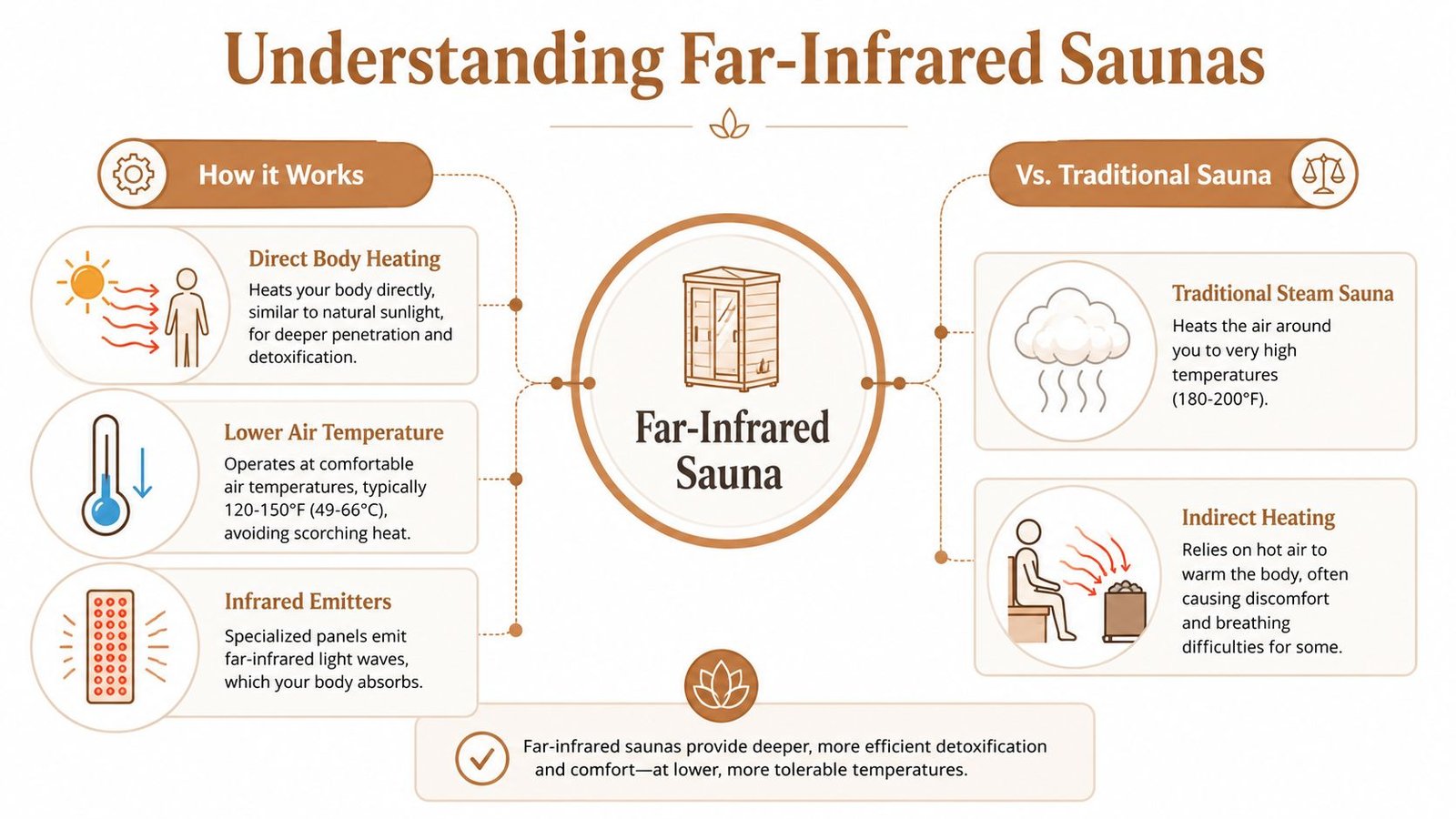
That lower room temperature is a practical advantage for beginners. Many people who dislike steam saunas aren't rejecting heat itself. They're rejecting the choking, claustrophobic feel of very hot air. Far-infrared is usually easier to tolerate because the warmth feels more even and less aggressive.
What your body is responding to
Once the body absorbs that radiant heat, several things happen in a sequence people can feel:
- Blood vessels dilate. You often notice this first as a spreading warmth through the limbs.
- Circulation increases. Tight areas begin to loosen, especially in the back, hips, and shoulders.
- Sweating builds gradually. It usually starts slower than people expect, then becomes steady and deep.
- The nervous system settles. Many clients become quieter in the sauna because the body no longer feels on alert.
Here's the simplest comparison:
| Sauna type | Main heating method | How it tends to feel |
|---|---|---|
| Far-infrared sauna | Direct radiant heat into the body | Deep warmth at lower room temperatures |
| Traditional steam sauna | Heats the surrounding air | Hot, dense air that can feel harder to breathe in |
Practical rule: If a sauna session feels like you’re only enduring hot air, you’re not getting the main advantage people seek from far-infrared.
That difference matters when you’re searching locally. Not every listing for infrared sauna near me makes this clear, and not every “infrared” service is focused on the deep warming effect that many people want for comfort, circulation, and body recovery.
Science-Backed Benefits of Far-Infrared Therapy
Far-infrared therapy isn’t valuable only because it feels pleasant. It has been studied for measurable effects that matter to clients who want something beyond a temporary sweat. The strongest practical uses tend to fall into three areas: cardiovascular support, pain relief, and the broader restorative effect of deep, tolerable heat.
Cardiovascular support without joint impact
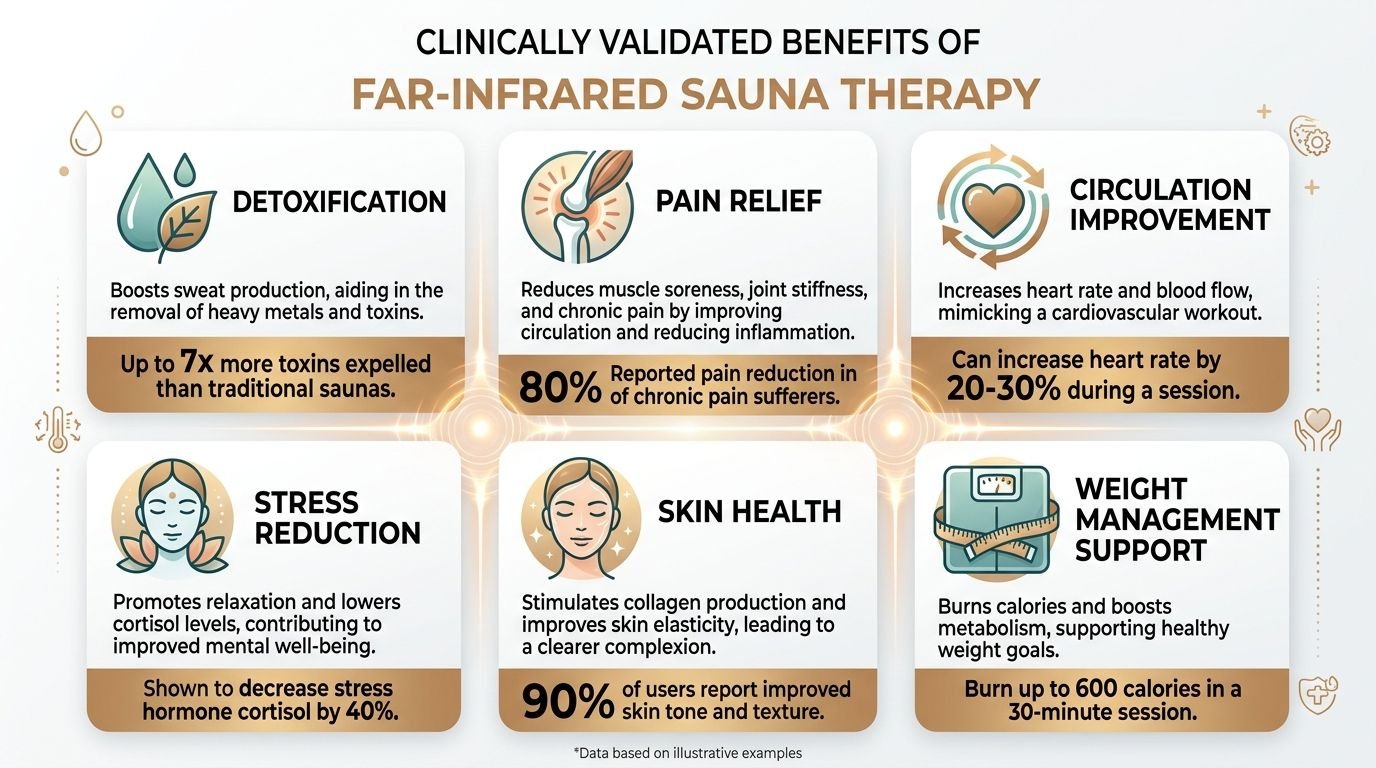
Far-infrared sauna therapy has shown 24 to 36% improvement in arterial function after four weeks of regular use, and its hemodynamic response is described as comparable to moderate-intensity aerobic exercise in the evidence summarized by Peak Saunas’ evidence guide. For clients who feel run down, deconditioned, or limited by joint discomfort, that matters.
This doesn’t mean sauna replaces movement. It means heat therapy can support circulation and vascular function in a way that feels accessible to people who aren’t ready for hard exercise or who need a lower-impact option as part of their routine.
A lot of wellness marketing talks loosely about “boosting circulation.” This is one of the areas where far-infrared stands out because the cardiovascular response has been observed clinically, not just described anecdotally.
Pain relief and restorative recovery
Pain relief is one of the most common reasons people stick with sauna once they start. The same evidence summary reports fibromyalgia pain reduction of up to 78%, and it also notes that regular sessions drastically alleviated pain associated with autoimmune conditions such as rheumatoid arthritis in the reviewed research.
Those findings line up with what many practitioners see in real appointments. Heat reaches places that are hard to relax by willpower alone. Muscles that stay guarded often begin to soften when the body no longer feels cold, compressed, or overstimulated.
People often pair sauna with other recovery-focused services because the body responds well to layered support. For clients building a broader reset routine, lymphatic drainage therapy is another non-invasive option some choose alongside heat-based care.
The most useful session is not the hottest one. It’s the one your body can settle into long enough to respond.
Why sweating matters in practice
Sweating is part of the appeal, but the biggest benefit isn’t “more sweat equals better results.” It’s that far-infrared encourages a deeper, more comfortable heat response that many people can tolerate consistently. Consistency is what turns a one-time relaxing session into a meaningful wellness habit.
The same evidence review also notes a lower incidence of cardiovascular events with frequent dry sauna bathing, including infrared variants, particularly in men, and reports that no adverse events were observed across the reviewed studies involving people with New York Heart Association class II and III congestive heart failure and systolic hypertension.
For a new client, the takeaway is simple:
- If you want a session that supports relaxation only, far-infrared can do that.
- If you want measurable therapeutic value, the evidence is strongest around circulation, vascular response, and pain support.
- If you want dramatic skin or beauty promises, those claims should be treated more carefully than the cardiovascular and pain data.
That distinction helps separate useful therapy from inflated marketing.
Your Private Infrared Sauna Session What to Expect
First-time nerves are normal. Individuals don’t worry about the heat as much as they worry about the unknowns. They want to know whether they’ll have privacy, whether someone will rush them, and whether they’re expected to already know what to do.
During the session
Once inside, the first few minutes usually feel gentle. Then the warmth starts reaching deeper. Some clients sit in silence. Others listen to calming audio or close their eyes and rest. There’s no need to “do” anything.
The best sessions are unhurried. You’re not forcing sweat. You’re allowing the body to warm gradually and respond. Many people notice:
- A slow release in the shoulders and lower back
- An easier breathing pattern after the first several minutes
- A shift from mental busyness to physical stillness
- A clean, deep sweat rather than the sticky discomfort of overheated air
That private pace makes a difference. In shared or high-turnover spaces, people often stay mentally alert. In a contained room, they let go.
This short video gives a visual sense of the environment and flow people often find reassuring before a first appointment:
After you step out
Post-session care is simple, but it matters. Cool down gradually. Drink water. Give yourself a few minutes before jumping back into errands, calls, or traffic. If possible, keep the rest of the day light.
A good session often leaves people feeling clear, calm, and pleasantly tired rather than drained. That’s the response you want. If someone leaves feeling overloaded, the session was probably too intense or too rushed.
Some clients expect a dramatic reaction. More often, the benefit is quieter. Better mobility, easier breathing, calmer focus, and a lighter body by the end of the day.
Safety First Is an Infrared Sauna Right for You
Far-infrared sauna is safe for many adults, but “safe for many people” isn’t the same as “right for every person at every moment.” A careful provider should say that plainly.
Who should pause and ask first
If you’re pregnant, dealing with an acute illness, actively inflamed, unusually heat-sensitive, or managing a medical condition that affects circulation or temperature regulation, it makes sense to check with your physician before booking. The same goes if you’ve had episodes of dizziness, fainting, or trouble tolerating heat in other settings.
That doesn’t mean you’ll automatically be told no. It means heat therapy should be matched to the person, not handed out like a generic add-on.
One reassuring point from the clinical evidence is that no adverse events were reported in reviewed studies involving far-infrared sauna use for certain heart-related conditions, as cited earlier. Still, research findings don’t replace an individual screening conversation. Practical safety starts with transparency about your history and goals.
The EMF and ELF question people should ask
One topic many local listings leave out is EMF and ELF exposure. That omission matters because people with heat sensitivity or cardiovascular concerns often want the full picture before they commit.
Guidance discussed in Sauna Cloud’s infrared sauna buying guide notes that users should request EMF/ELF test results and electrical documentation rather than assuming every commercial sauna meets the same standard. That’s a reasonable question, and more clients should ask it.
If you’re comparing providers, use this checklist:
- Ask what type of sauna it is. “Infrared” is too broad to be useful by itself.
- Ask whether EMF or ELF testing information is available. A serious provider shouldn’t act annoyed by the question.
- Ask how privacy is handled. Safety includes emotional comfort, not just equipment.
- Ask what happens if you feel overheated or need to stop early. Good care includes flexibility.
Clients in Central New Jersey often want a non-clinical setting, but they also want standards. Those aren’t opposites. A wellness appointment can feel warm and personal while still being careful, informed, and professionally managed.
Booking Your Session in Perth Amboy NJ
If you’ve been typing infrared sauna near me into Google and comparing options, the practical details usually decide whether you book now or keep postponing it.
What to know before you schedule
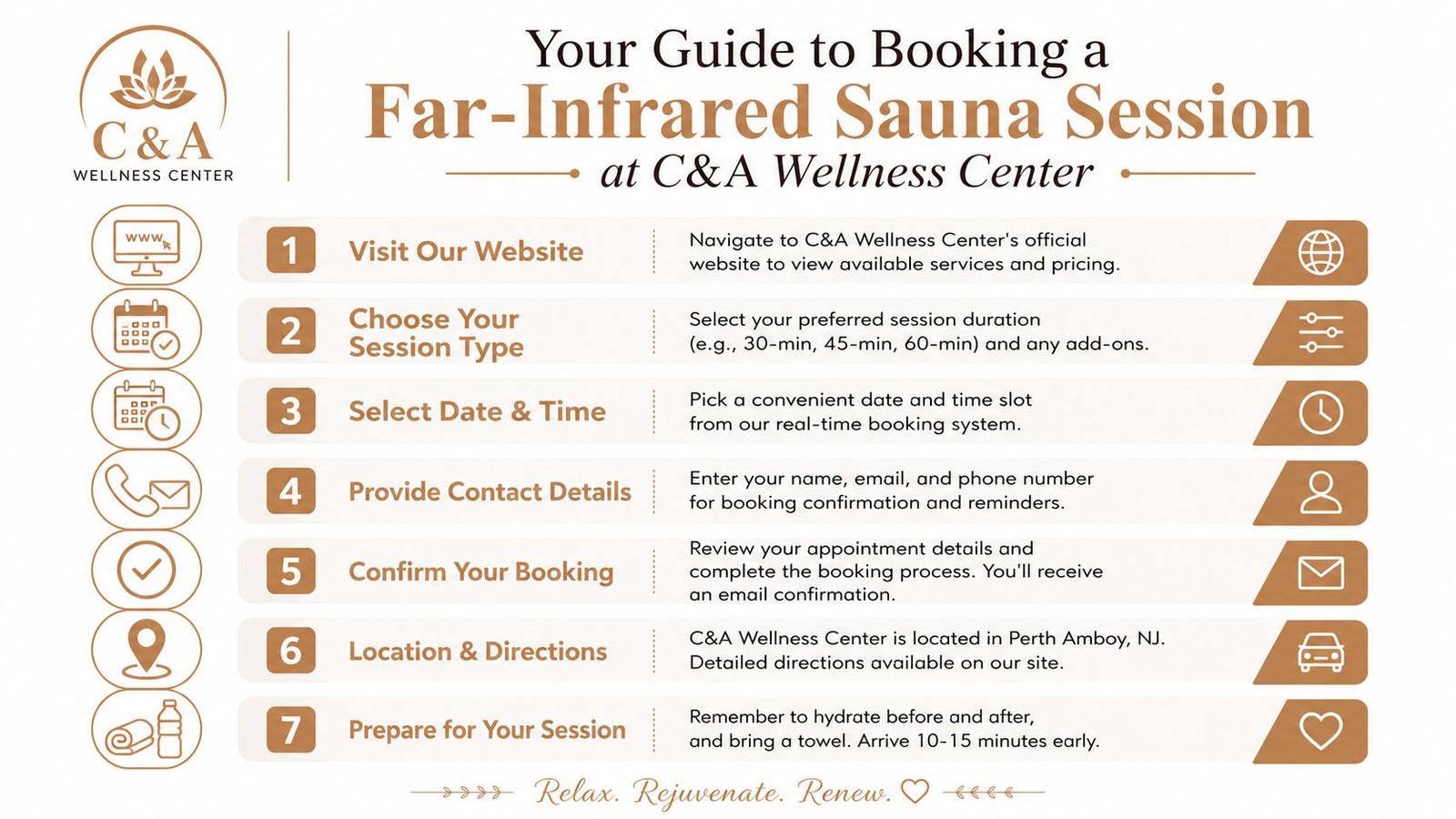
C&A Wellness Center is located at 416 Washington St., Perth Amboy, NJ and is open daily from 8 AM to 3 PM. Appointments are scheduled by phone or text, which many clients prefer because they can ask a few questions first and get a direct answer without pressure.
Before you book, keep the prep simple:
- Hydrate beforehand: you’ll have a better session if you don’t arrive already depleted.
- Wear easy clothing: comfort matters more than appearance.
- Leave a little buffer in your schedule: a sauna works better when you’re not rushing in and out.
- Think about your goal: stress relief, body recovery, or part of a broader detox-focused routine.
For people exploring other non-invasive services in the same setting, this overview of a holistic wellness center in Perth Amboy and non-invasive body contouring options gives a broader sense of what may fit into a personalized visit.
Central New Jersey service area
The location is practical for clients coming from nearby Middlesex County communities and surrounding areas, including:
| Nearby areas served | Common reason people travel in |
|---|---|
| Edison, Woodbridge, Sayreville | Local wellness and recovery visits |
| South Amboy, Old Bridge, Carteret | Private appointments without a shared spa setting |
| South Brunswick, New Brunswick, Metuchen | Complementary non-invasive wellness care |
The simpler the booking process, the easier it is to turn interest into an actual routine. That matters because people usually know they need the reset long before they finally schedule it.
Infrared Sauna FAQs for Our New Jersey Clients
Is far-infrared the same as red light therapy
No. This is one of the biggest points of confusion in local wellness marketing.
Most content targeting people who search for infrared sauna near me doesn’t clearly separate far-infrared heat from red or near-infrared light therapy. As discussed in this video explanation about the difference between far-infrared and red-light-focused claims, that confusion can leave clients unable to verify whether a “full-spectrum” setup delivers the 7 to 12 micron far-infrared wavelength needed for deep therapeutic heat.
The practical difference is this:
- Far-infrared is chosen for core warming and deep heat.
- Red or near-infrared light therapy is usually discussed more in relation to surface-level or skin-focused goals.
That doesn’t make one universally better than the other. It means they are different tools. If your goal is a deep, restorative sweat and internal warming at lower room temperatures, far-infrared is the relevant category.
How often should I book
That depends on your reason for coming.
If your main goal is relaxation, many people start with occasional sessions and judge by how they feel afterward. If your goal is body recovery or part of a larger wellness routine, consistency usually matters more than intensity. A moderate, repeatable schedule tends to work better than one very strong session followed by long gaps.
The best pattern is the one you can tolerate comfortably and return to without dread. If you leave feeling supported, not depleted, that’s a good sign the schedule is realistic.
Can I combine sauna with other wellness services
Yes, many clients do. Sauna often fits well into a broader self-care day because heat can help the body settle and transition into rest. Some people prefer it as a standalone appointment. Others use it alongside complementary non-invasive services.
What matters most is pacing. Don’t stack too many things into one visit just because they’re available. Choose combinations that still let you stay hydrated, relaxed, and attentive to how your body responds.
If you’re unsure where to start, ask for the simplest route. First-time clients usually benefit from trying one service, noticing how they feel, and building from there rather than treating wellness like a checklist.
If you’d like a private, one-on-one far-infrared sauna appointment in Perth Amboy, you can learn more or request scheduling through C&A Wellness Center. The practice serves Central New Jersey clients with calm, guided wellness appointments designed around comfort, privacy, and clear communication.