You're standing in front of the mirror, turning slightly, and focusing on the same stubborn area again. Maybe it is your abdomen, maybe your flanks, maybe the tops of your thighs. Diet and exercise have helped overall, but one pocket of fat still stays put, and you do not want surgery, scars, or a long recovery just to refine your shape.
That is why ultrasonic cavitation body contouring comes up in the first conversation. It uses low-frequency sound energy to target localized fat, and it is discussed as a circumference-reduction option rather than a weight-loss treatment. In simple terms, it is aimed at shaping a specific area, much like trimming one branch on a tree instead of changing the whole tree.
For people in Central New Jersey, especially if you are booking a private appointment and want a clear answer before you commit, the main question is often a practical one. Am I a good candidate for targeted contouring, and what change should I reasonably expect from my body and my measurements?
At a local practice in Perth Amboy, those are the kinds of questions clients often ask first. They usually want to know whether the treatment fits their body type, which areas are realistic to treat, and how to prepare so the appointment feels straightforward instead of confusing.
Table of Contents
- Introduction to Ultrasonic Cavitation Body Contouring
- Understanding Ultrasonic Cavitation Technology
- Benefits and Limitations of Ultrasonic Cavitation
- Safety Considerations and Ideal Candidacy
- Preparing for Your Session and What to Expect
- Results Expectations and Treatment Plan
- Comparing Other Non-Surgical Body Contouring Options
- Frequently Asked Questions
Introduction to Ultrasonic Cavitation Body Contouring
A lot of people first hear about this treatment the same way they hear about any body-sculpting option, from a friend who wants smoother jeans, a social post about “breaking up fat,” or a local wellness practice that offers a private consultation. The questions usually come fast. Does it hurt? Is it for belly fat only? How much change can you see?
Ultrasonic cavitation body contouring is best understood as a targeted sculpting tool, not a dramatic transformation procedure. Ex vivo research showed a 23% decrease in adipocyte lipid-vacuole size versus control tissue, with micropores and triglyceride leakage seen within 15 minutes of treatment, while the surrounding microvascular, stromal, and epidermal components showed no appreciable change (clinical milestone study).
That early mechanistic evidence helped explain why the treatment became attractive in wellness and aesthetic settings. It suggested that low-frequency ultrasound could disrupt fat-cell structure without the tissue destruction associated with surgery, which is why people often compare it with liposuction even though the experience is very different.
For a New Jersey client, the appeal is simple. You can ask careful candidacy questions, review your body goals in private, and decide whether localized contouring fits your expectations before committing to a series of sessions.
Understanding Ultrasonic Cavitation Technology
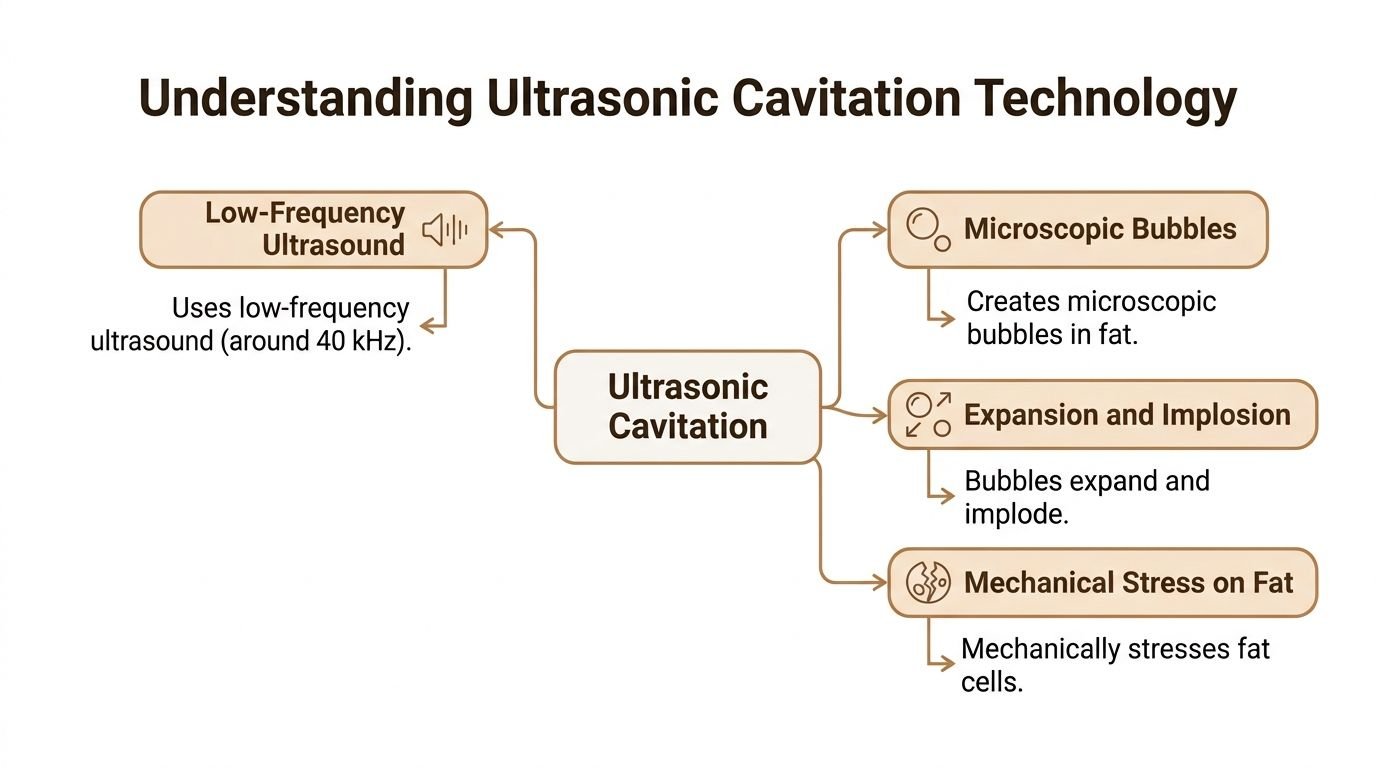
A New Jersey client usually wants the simple version first. A handheld device moves over the skin, sound energy reaches the fat layer, and the treatment aims at a very specific physical response under the surface. Ultrasonic cavitation typically uses low-frequency ultrasound near 40 kHz, where pressure oscillations create microbubbles in subcutaneous fat. When those bubbles expand and implode, they create localized mechanical stress that can rupture adipocyte membranes and release triglycerides without directly damaging nearby vascular or neural structures (technical overview).
A simple step-by-step view
First, the device sends sound energy through the skin. Then tiny bubbles form in the fat layer. After that, the bubbles expand and collapse, which creates a pressure effect that acts more strongly on fat cells than on surrounding tissue. Finally, the released lipid is moved through the lymphatic system for downstream metabolism.
The easiest way to understand it is to separate the sound from the result. The ultrasound is not tearing the whole area apart, it is creating a focused mechanical effect in one layer beneath the skin. The histology-based description in the technical overview also notes focal adipocyte ruptures on the order of 0.5 to 1.5 µm, which helps explain why the treatment is discussed as a contouring tool rather than a broad tissue-remodeling procedure.
Practical rule: If a provider describes cavitation like fat “melting away” instantly, slow the conversation down. The actual process depends on controlled mechanical disruption and the body's own clearance pathways.
Why it differs from surgery
Liposuction physically removes fat. Cavitation works externally without incisions, and the goal is to change the shape of a treated area over time through measured contour reduction. That difference matters because it shapes everything from recovery time to expectations.
Benefits and Limitations of Ultrasonic Cavitation
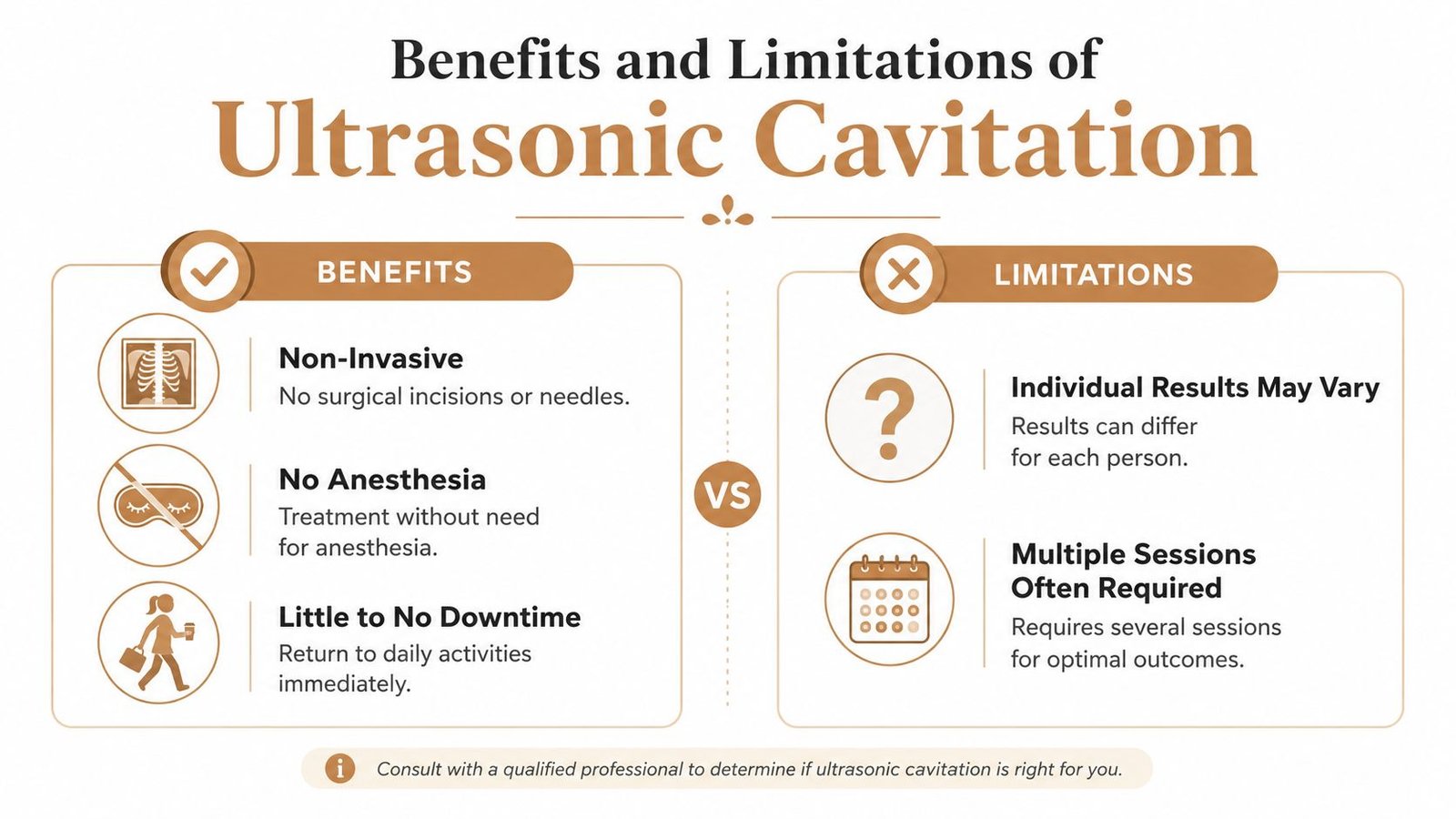
A lot of people like this option because it is easy to fit into a normal schedule. There is no anesthesia, no incision, and no surgical recovery period to arrange around, so a session can usually be placed into an ordinary day with little disruption afterward.
The strongest fit is usually in localized areas such as the abdomen, flanks, hips, thighs, and upper arms, especially when the goal is refinement of shape rather than a large change in body size. In practice, that makes it more relevant for contouring than for broad slimming.
What it does well
It can work well for small, pinchable fat pockets and for clients who want a gentler alternative to surgery. In a clinical comparison, cavitation and cryolipolysis both improved waist circumference and suprailiac skinfold compared with diet alone, and neither method showed a statistically significant difference from the other on those measurements (comparative clinical study).
For a New Jersey wellness practice, that usually means the first conversation should focus on the exact area you want changed and how much soft tissue is present there. A client who can pinch a modest pocket of fat at the abdomen, flanks, or thighs is often a better candidate than someone hoping for broad overall slimming. Success is usually measured by changes in clothing fit and inches in the treated area, which gives a more realistic picture than expecting major changes on the scale.
Where it falls short
It does not function as a weight-loss treatment, and it does not address visceral fat. The FDA's body-contouring guidance describes non-invasive body contouring as a way to reduce circumference in a treated area, while making clear that this is separate from treating obesity or replacing general weight-management care.
Results are usually judged by inches and fit, with body weight changing less dramatically, if at all.
The clients who tend to feel satisfied are the ones who arrive with a narrow target and realistic expectations. If the goal is a full-body slimming effect, this treatment is a poor match. If the goal is localized contouring with minimal interruption to your week, it can be a practical option.
Safety Considerations and Ideal Candidacy
Candidacy is where a lot of public content gets vague, and that's a problem. The question isn't just whether ultrasonic cavitation works, it's whether it makes sense for your body, your health history, and the area you want treated. Independent guidance notes that treatment is intended for localized fat on the abdomen, flanks, thighs, hips, and upper arms, while bony regions such as the head, neck, knees, ankles, and collarbones are not suitable (area suitability guidance).
Ideal candidate profile
The best fit is usually someone with localized, pinchable fat and a clear contouring goal. That person understands that the treatment is about shaping, not replacing healthy habits or acting as a shortcut for overall slimming.
A private consultation is the right place to confirm that your target area has enough soft tissue to treat safely. That conversation should also review your goals, your medical history, and any issues that could make a treatment unwise.
Who should pause before booking
Pregnancy is a clear reason to avoid treatment. So are situations where the treatment site has minimal soft tissue, or where a device could interact badly with implanted hardware or active medical concerns. In plain language, if the area is bony, medically complex, or not clearly a localized fat pocket, that's not a casual “maybe.”
- Localized fat only: Best suited to areas where you can pinch soft tissue, not hard bony landmarks.
- Body-region match: Abdomen, flanks, thighs, hips, and upper arms are the common targets.
- Medical screening matters: A consultation should review current health conditions, implanted devices, and any site-specific concerns.
For New Jersey clients who want a careful intake process, C&A Wellness Center offers private, one-on-one appointments with an I-ACT certified therapist, which gives room for candid screening before anything starts.
Preparing for Your Session and What to Expect
A good appointment begins before you arrive. Plan to show up ready to talk through your goals, your health history, and the specific area you want treated. If you're comparing local options, this is the kind of process that should feel measured and personal, not rushed.
Once you're in the treatment room, the therapist typically marks the target zone and applies ultrasound gel before moving a handheld device across the skin. The session itself is usually described as warm and quiet, more like a focused therapeutic pass than a dramatic procedure.
A simple appointment flow
- Consultation and screening. Your provider confirms the target area and checks whether the treatment matches your body type and history.
- Setup. The skin is prepared with gel so the handpiece can glide and transmit energy effectively.
- Treatment pass. The device moves over the area in controlled motions while you remain comfortable.
- Aftercare guidance. You leave with instructions on hydration and activity.
For a local example of how people often think about non-invasive body services in Perth Amboy, this overview of a Holistic Wellness Center in Perth Amboy helps frame the broader wellness setting, including how body contouring fits alongside other supportive services.
What to do before and after
Hydration is the main preparation point people remember, but preparation also includes being honest about medications and health conditions. Afterward, many providers encourage gentle movement and hydration so the body can keep processing the released lipid through normal clearance pathways.
Practical advice: Don't overcomplicate the day of treatment. Wear comfortable clothing, drink water, and arrive ready to discuss what area you want to refine.
That kind of appointment should leave you informed, not confused. If you walk out wondering what happened, the session wasn't explained well enough.
Results Expectations and Treatment Plan
A client in a New Jersey wellness office often wants one clear answer before booking, how much change should they expect, and how will the clinic track it. The most helpful way to think about results is in centimeters, not drama. A focused ultrasound study reported measurable circumference change after treatment, which is the kind of shift that should be discussed in plain numbers rather than vague promises. That is real contour change, but it is still a measured one.
What the timeline looks like
The body does not remove released fat all at once, so results are usually reviewed across a treatment plan instead of after a single visit. That is why local providers often ask clients to return for repeat measurements, photos, and a look at the treated area under the same conditions each time. In practice, waist circumference and nearby skinfold measurements are the main markers people should expect to track, since they show whether the contour is changing in a way you can verify.
Measure the same spot the same way each time. Use the same tape measure, the same posture, and the same landmark points. Otherwise, a small difference in how you stand or where the tape sits can make the result look better or worse than it really is.
What influences the outcome
Lifestyle still matters. A clinical study found that focused ultrasound cavitation paired with aerobic exercise reduced abdominal and intrahepatic fats, which suggests the treatment can work better when it is part of a broader routine rather than a stand-alone fix (aerobic exercise adjunct study).
- Hydration helps clearance: The body moves released lipid through normal clearance pathways.
- Exercise can support results: Movement appears to strengthen outcomes when it is used alongside treatment.
- Healthy habits matter: Stable routines help preserve the contour after treatment.
For people who want extra support after body contouring, some providers also discuss post-session care that encourages gentle fluid movement. A local resource on lymphatic drainage therapy shows how clients sometimes think about recovery and maintenance in a wellness setting.
Comparing Other Non-Surgical Body Contouring Options
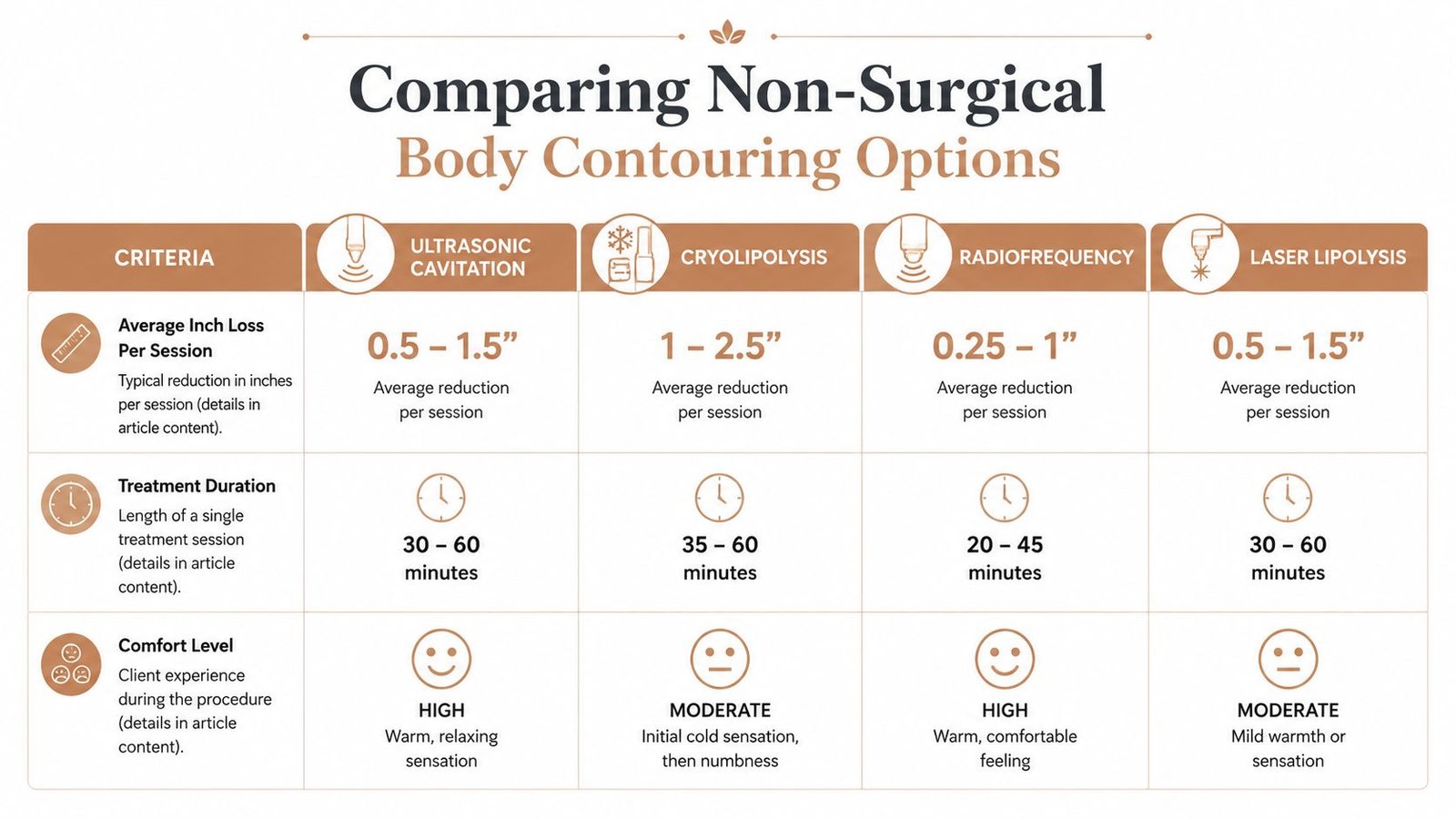
A client in a New Jersey wellness practice may hear several body contouring options discussed during the same consultation, and the right one usually depends on the result they want, the sensation they are comfortable with, and how much recovery time they can manage. Ultrasonic cavitation fits people who prefer a warm, movement-based session. Cryolipolysis may appeal to someone who wants a cold-based approach. Radiofrequency is often considered when skin firmness matters as much as contour.
The better question is not which treatment is superior. The more useful question is which one matches the area being treated, the kind of change someone wants to measure, and the experience they are willing to have on the treatment table.
How cavitation compares
Cavitation has been compared with cryolipolysis in abdominal contouring research, and both approaches improved waist circumference and suprailiac skinfold without a clear statistical difference between them. That kind of finding matters because it places cavitation among legitimate non-surgical options rather than treating it like a novelty.
How to think about the choice
- Ultrasonic cavitation: A good fit for localized contouring when a warm, non-invasive session is preferred.
- Cryolipolysis: Uses cold-based fat reduction, which some clients choose because the sensation is different from heat-based treatments.
- Radiofrequency: Often discussed when skin tightening support is part of the plan.
- Laser lipolysis: Another targeted fat reduction option, with its own device style and treatment feel.
If you want a plain-language comparison between body sculpting options and surgical fat removal, this ultrasonic cavitation vs liposuction overview can help separate what a non-surgical visit is meant to do from what liposuction is designed to accomplish.
For people comparing options in Central New Jersey, convenience matters only after candidacy is clear. The treatment should match the area being treated, the measurements you expect to track, and the amount of change that is realistic for your body.
Frequently Asked Questions
How long does a session take
The actual treatment is usually short enough to fit into a busy day, but the full visit includes check-in, screening, and aftercare guidance. Plan for enough time to ask questions so you're not rushing out the door with unclear expectations.
What should I wear
Wear comfortable clothing that's easy to move around in. You'll want something simple enough that the treatment area can be accessed without turning the visit into a hassle.
What does it feel like
A warm, noninvasive sensation rather than pain is typically described. Some notice mild buzzing or tingling, but the experience is generally framed as comfortable.
What about side effects
Temporary redness, warmth, or mild bruising can happen. If you're worried about your skin response, ask the provider what they consider normal for the area being treated and what would count as a reason to pause.
How many follow-ups are typical
A series of visits is typically needed rather than a single visit, and the spacing should be discussed during consultation so the plan matches your goals and your body's response. Keep in mind that the value is in measured contour change, not chasing a quick scale drop.
What should I expect after treatment
Hydration and gentle movement are the most common follow-up habits, because the body needs time to clear the released lipid through its normal pathways. If you want a deeper review of body contouring options and a private appointment structure in Perth Amboy, a local wellness practice can walk you through the same process before you book.
If you're ready to explore whether ultrasonic cavitation body contouring fits your goals, contact C&A Wellness Center to ask about candidacy, preparation, and what a private consultation looks like in Perth Amboy. A straightforward conversation can save you time, set realistic expectations, and help you decide whether a localized contouring plan makes sense for your body.