
Individuals exploring colon hydrotherapy in New Jersey typically find themselves in one of two positions. They are either curious but nervous, or they have already reviewed a dozen glowing wellness pages and observed that very few explain what the procedure feels like, who should avoid it, or what the medical literature says about the risks.
That missing context matters. A first colonic shouldn’t feel mysterious, salesy, or rushed. It should feel clearly explained, private, and grounded in honest trade-offs so you can decide whether it belongs in your wellness routine at all.
Table of Contents
- What Is Professional Colon Hydrotherapy
- A Balanced View of Benefits and Potential Risks
- Is Colon Hydrotherapy Right for You? Key Contraindications
- Your Private Session Step-by-Step
- Finding Certified Colon Hydrotherapy in Central New Jersey
- Frequently Asked Questions About Colonics in NJ
What Is Professional Colon Hydrotherapy
A first appointment usually starts the same way. Someone sits down, lowers their voice, and asks if a colonic is going to be painful, embarrassing, or too intense for their body. A professional session should feel controlled, private, and clearly explained before anything begins.
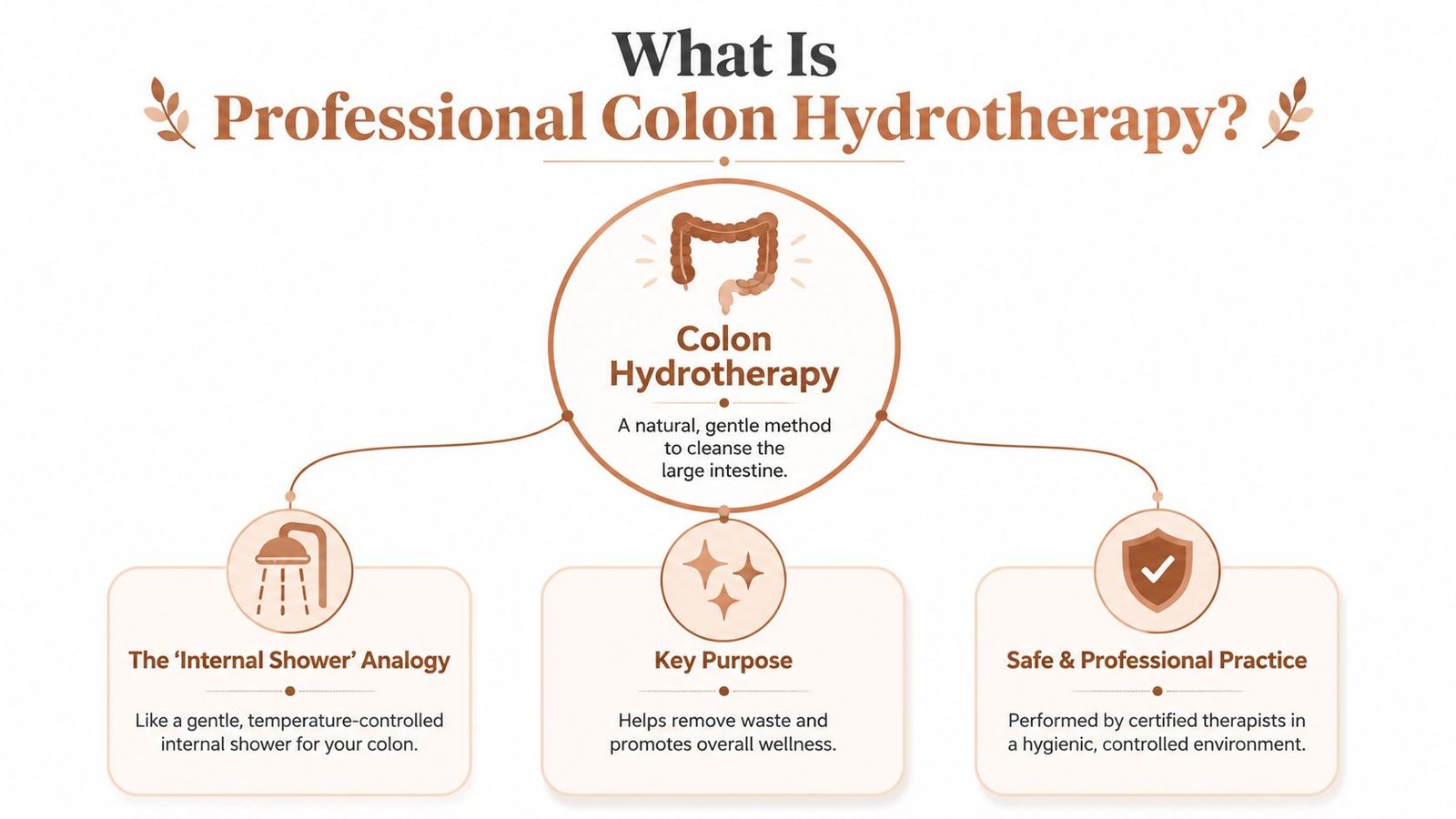
Professional colon hydrotherapy uses warm, filtered water introduced into the large intestine through regulated equipment in a series of gentle fill-and-release cycles. The purpose is to support the body’s natural elimination process in a supervised setting, with attention to hygiene, pressure control, and client comfort.
How the equipment works
The systems used in professional practice are FDA-registered closed-loop devices designed for colon hydrotherapy. FDA device documentation describes warm, filtered water delivered at low pressure, 0.25 to 2.0 psi, with fill-and-empty cycles that rely on natural peristaltic release rather than chemical stimulation or mechanical suction, according to the FDA device documentation for colon hydrotherapy systems.
For a client, the practical takeaway is simple. The water flow is measured, waste is contained within the system, and the therapist can monitor the pace throughout the session. That is a very different setup from anything improvised at home.
If you want a clearer picture of what the process looks like in real life, this professional step-by-step guide to how a colon cleanse works walks through the mechanics in plain language.
Practical rule: If a provider cannot explain the device, sanitation protocol, and pressure settings clearly, keep looking.
What makes it different from an enema
An enema usually targets the lower part of the bowel and is often done quickly at home. Professional colon hydrotherapy is a therapist-guided service performed with regulated equipment, controlled water flow, and repeated cycles over the course of a session.
That difference affects comfort, privacy, and safety.
A professional appointment is built around details first-time clients care about:
- Low-pressure water delivery helps keep the session gentle.
- Closed-system hygiene supports privacy and reduces mess.
- Single-use components are required, since cleanliness is paramount in this type of service.
- Therapist monitoring allows the pace to be adjusted if cramping, anxiety, or discomfort shows up.
Volume can vary by device and protocol, but a reputable provider does not treat more water as better. The session should be measured and responsive to the person on the table, especially in a safety-first practice serving New Jersey clients who want the full picture before they book.
A Balanced View of Benefits and Potential Risks
A first-time client usually wants the same thing from this conversation. A clear answer about what they might feel after a session, what is supported by evidence, and what risks should be taken seriously before booking.
In a safety-first practice, those points belong together. People in New Jersey looking for colon hydrotherapy deserve more than sales language. They need the full picture, including the limits of the research and the situations where caution matters more than curiosity.
What people commonly report after a session
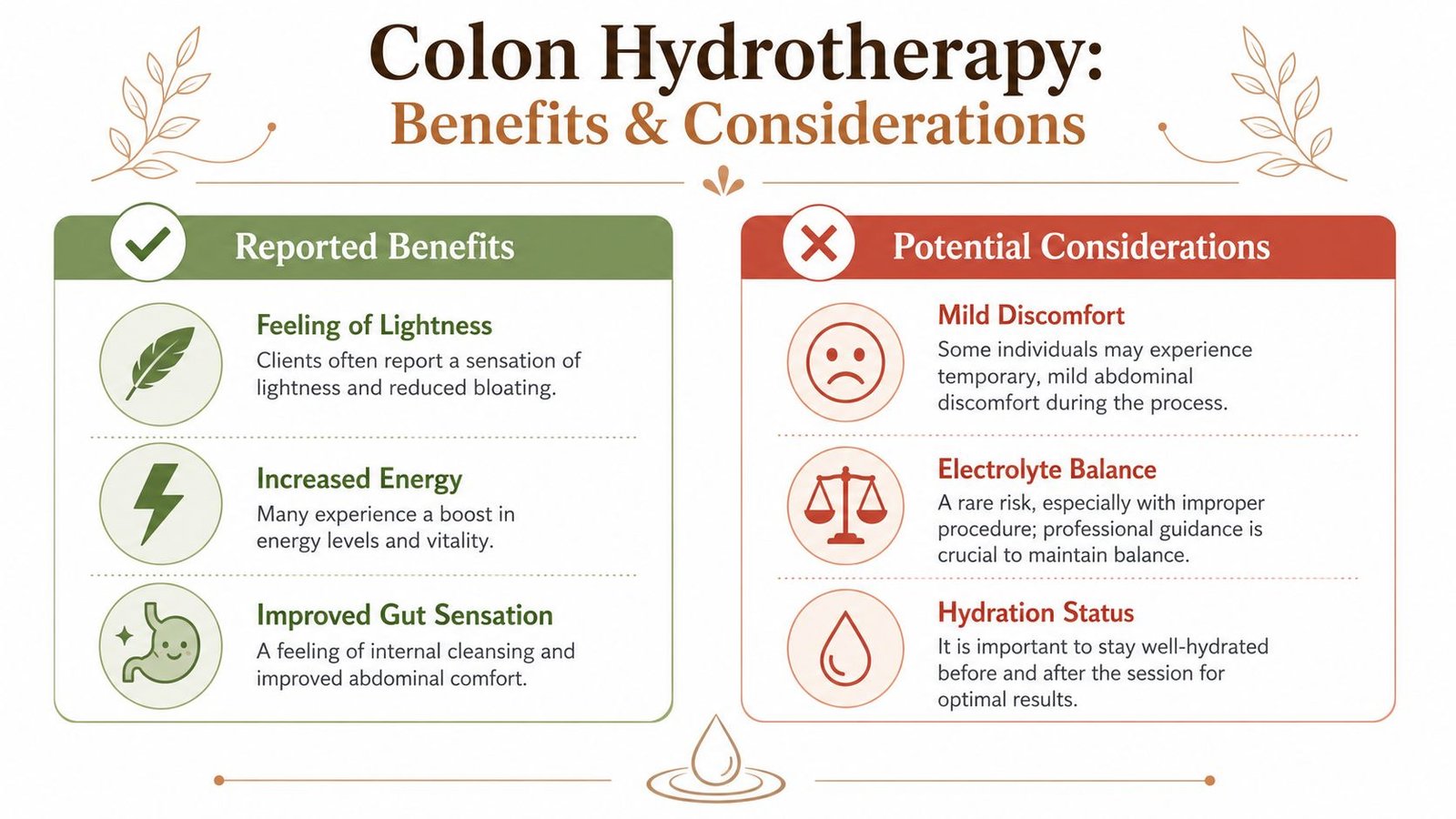
Many clients describe feeling lighter, less bloated, or more comfortable in their abdomen after a session. Some report a temporary sense of regularity or relief, especially if they came in feeling sluggish or backed up. Those experiences are real to the person having them, but they are still personal reports, not proof that the treatment produces broad medical benefits.
There are narrower medical settings where colon hydrotherapy has been studied more seriously. A clinical review on colon hydrotherapy uses and limits describes its use in bowel preparation and remedial cleansing, which is very different from general wellness marketing.
If your interest is the wellness side rather than bowel prep, this overview of colonic therapy for your health explains the consumer perspective in more practical terms.
The same clinical review also discusses session logistics such as water volume, appointment length, and typical out-of-pocket cost. Those details help set expectations. They do not prove claims about detox, weight loss, or long-term disease prevention.
What the medical literature does and does not support
Clients often ask whether colon hydrotherapy “detoxes” the body. The honest answer is that routine detox claims go well beyond the evidence. The liver and kidneys already do the body’s primary detoxification work, so broad statements about flushing undefined toxins from the system are not well supported by the literature.
That gap matters.
The medical literature is more cautious than many spa-style descriptions suggest. An AAFP-linked review indexed on PubMed found a lack of good-quality published evidence showing general health benefit from colonic cleansing, while also documenting potential harms.
Those harms are not minor talking points. The review describes reported adverse events including colon perforation, disseminated abscesses, aplastic anemia, and liver toxicity linked to some herbal preparations used alongside cleansing programs. That does not mean every session is dangerous. It does mean no ethical provider should present the service as risk-free.
Feeling better after a session is possible. That feeling should not be used to justify every claim attached to colon cleansing.
A balanced conclusion is more useful than a hard sell. Colon hydrotherapy may be a reasonable wellness service for some carefully screened adults in a professional setting that emphasizes sanitation, low-pressure delivery, privacy, and close monitoring. It is not a proven cure-all, and it is not appropriate for everyone.
Is Colon Hydrotherapy Right for You? Key Contraindications
This is the part many local pages skip or hide. They shouldn’t. A responsible provider should screen for contraindications before discussing availability, pricing, or package options.
If you have the wrong health history for this service, the safest appointment is the one you never book.
When you should avoid treatment
Medical sources confirm that colonic hydrotherapy is contraindicated for people with inflammatory bowel disease, including Crohn’s disease and ulcerative colitis, as well as diverticulitis, severe hemorrhoids, kidney problems, heart problems, and pregnancy, due to risks that include colon perforation, according to this contraindication overview for colon hydrotherapy.
That list should be treated as a hard stop, not a suggestion. If you also have recent abdominal or rectal surgery, active bleeding, severe digestive pain, or a medical condition that makes fluid balance risky, you need medical guidance before considering any bowel cleansing service.
Your health history matters more than your curiosity. If a provider doesn’t ask about it in detail, that’s a red flag.
Safety checklist
| Condition | Reason for Caution |
|---|---|
| Crohn's disease | Inflamed bowel tissue may be more vulnerable to injury and complications |
| Ulcerative colitis | Active inflammation increases risk and makes routine cleansing inappropriate |
| Diverticulitis | The bowel wall may be irritated or weakened |
| Severe hemorrhoids | Rectal irritation and procedural discomfort can be aggravated |
| Kidney problems | Fluid and electrolyte handling may already be compromised |
| Heart problems | Changes in fluid balance can pose added risk |
| Pregnancy | Medical sources list pregnancy as a contraindication |
| Recent surgery | Healing tissue may not tolerate the procedure safely |
A careful provider will also ask follow-up questions, not just hand you a checkbox form. Symptoms, diagnosis status, medications, and recent procedures all matter.
Your Private Session Step-by-Step
Most first-time anxiety comes from not knowing what the appointment will be like. Once people understand the flow of a session, the unknown becomes much easier to manage.
What happens when you arrive
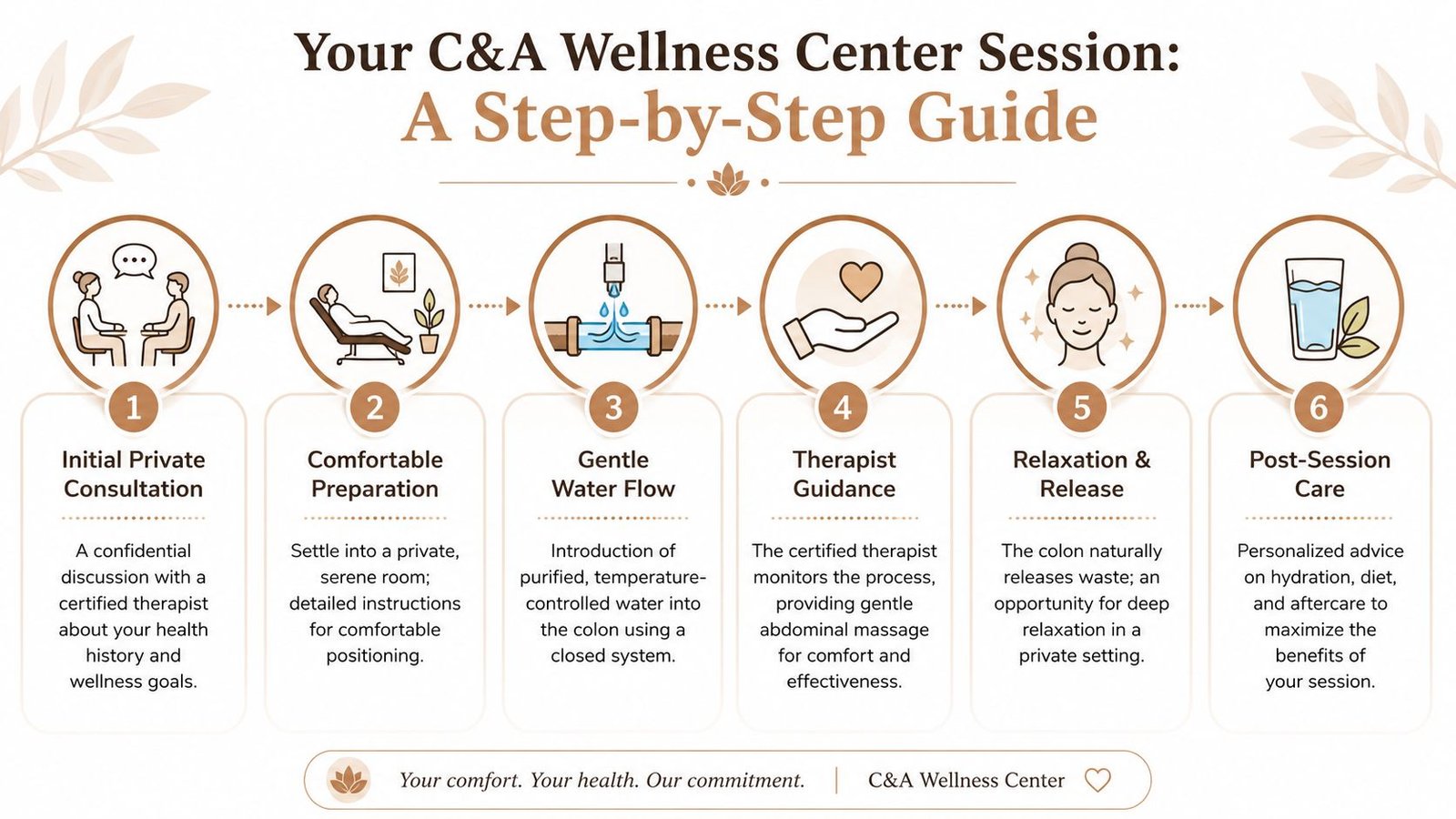
A proper appointment starts with a private conversation, not with equipment. You should be asked about your health history, current symptoms, medications, hydration, and whether you’ve had this type of treatment before. This is also when you should be encouraged to ask direct questions.
If you’re modest or worried about embarrassment, that concern is common. A professional room setup should feel contained and private, with clear instructions and draping that preserves dignity. You’re not expected to know what to do on your own.
For a more detailed preview, this guide to a private colonic session in NJ gives a useful client-focused walkthrough.
What the session feels like
Once you’re positioned comfortably, a small single-use speculum is inserted gently. Device documentation describes insertion at about 2 inches into the rectum with warm filtered water introduced through the system in controlled cycles, as covered earlier in the FDA device material.
Individuals typically feel pressure, fullness, and periodic release rather than pain. The sensations tend to come in waves as the water enters, the colon responds, and the body releases naturally. If you’re tense, the session can feel more intense. If you’re breathing and not rushing the process, it usually feels more manageable.
A therapist-guided session generally unfolds like this:
- You settle in privately. The therapist explains positioning and what you’ll feel first.
- Water begins gently. The initial fill is usually the moment people notice mild pressure.
- Release follows. This is the part that often reduces anxiety because clients realize the system is contained and discreet.
- Cycles repeat. The pace is adjusted to comfort, not forced on a timer.
- You rest briefly afterward. Standing up slowly, hydrating, and giving your body a few quiet minutes helps.
“The more specific the explanation, the calmer the first session usually feels.”
Afterward, people often feel lighter, quieter in the abdomen, or relieved that the appointment was more private and matter-of-fact than they expected. Some also feel tired and prefer to keep the rest of the day simple with water, easy meals, and less rushing.
Finding Certified Colon Hydrotherapy in Central New Jersey
A first appointment usually starts long before you get on the table. It starts when you call a provider and ask a few plain questions. The answers tell you a lot.
A safe provider in New Jersey should speak clearly about training, sanitation, privacy, and medical screening. The right conversation is calm and specific. It should also include reasons someone may need to postpone treatment or avoid it entirely.
What to verify before you book
A quick checklist helps separate a careful practice from one that relies on vague wellness language:
- Ask about certification and experience. The therapist should explain where they trained, what their certification covers, and how they handle first-time clients.
- Ask what screening happens before booking. Health history should come before sales talk.
- Ask about the equipment and sanitation process. You want clear answers about cleanliness, single-use items, and how the system is maintained.
- Ask how privacy is handled. A private room, discreet setup, and respectful communication matter.
- Ask what happens if you feel discomfort or have questions mid-session. Good care includes pacing, feedback, and the ability to stop if needed.
Be cautious with any provider who talks only about detox, weight loss, or dramatic results. A trustworthy clinic explains limits, risks, and who is not a good candidate.
Local option in Perth Amboy
C&A Wellness Center is located at 416 Washington St., Perth Amboy, NJ, and is open daily from 8 AM to 3 PM. The practice offers private, one-on-one appointments with an I-ACT certified therapist with more than 20 years of experience and serves clients from Edison, Woodbridge, Sayreville, South Amboy, Old Bridge, Carteret, South Brunswick, New Brunswick, and Metuchen.
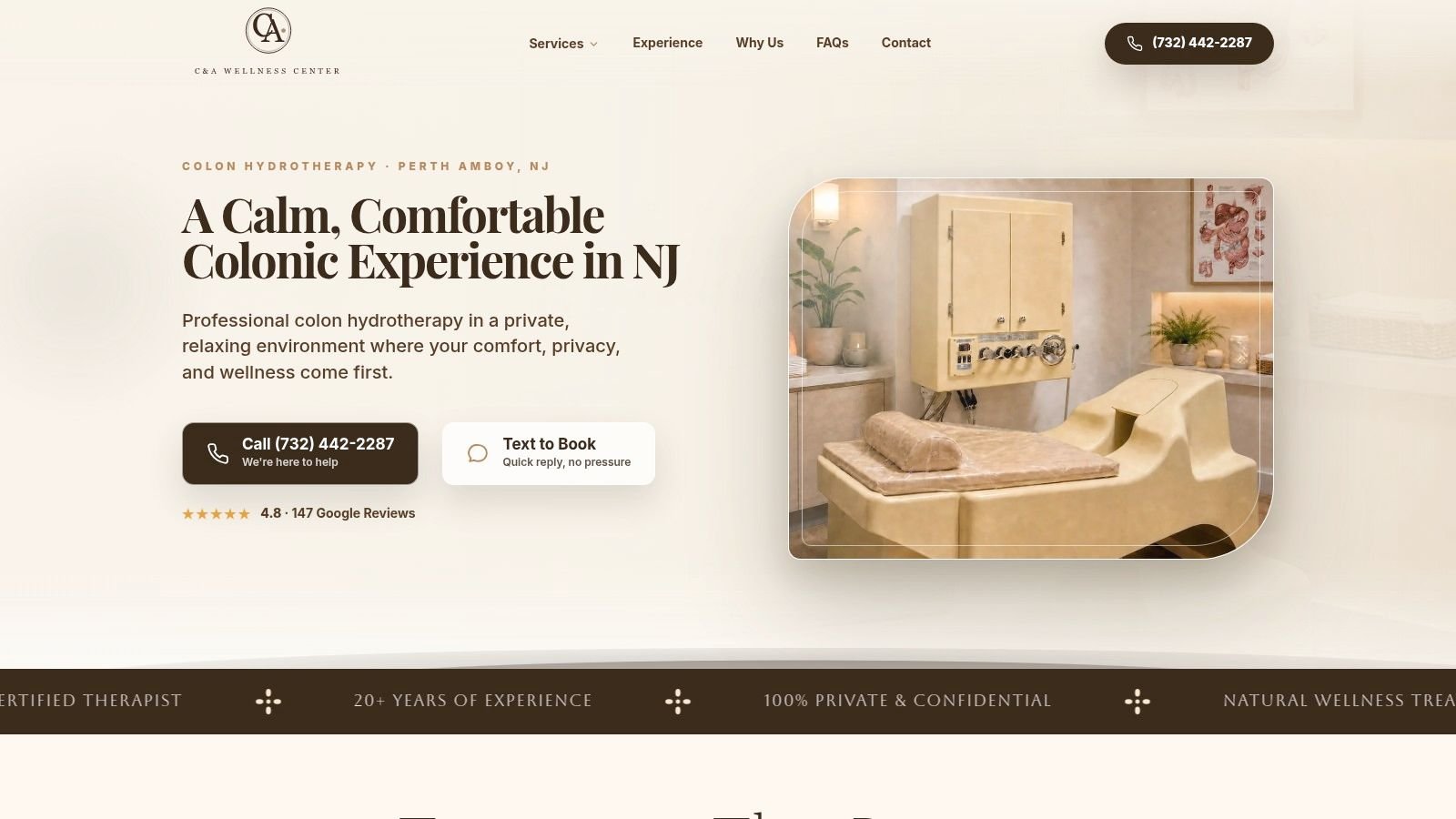
Those details are a starting point, not a substitute for proper screening. If you are comparing providers in Central New Jersey, look for the one willing to give you the full picture with no pressure, including expected sensations, documented risks, and clear medical contraindications. That level of honesty is usually the best sign that your safety, comfort, and privacy are being taken seriously.
Frequently Asked Questions About Colonics in NJ
Does colon hydrotherapy hurt
The sensation is often described as pressure, fullness, cramping at moments, or an urge to release, not sharp pain. The exact sensation depends on how tense you are, how sensitive your abdomen is that day, and whether your provider moves at a comfortable pace.
Pain isn’t something to push through casually. If something feels wrong, you should say so immediately. Good communication during the session matters as much as the equipment.
How should you prepare for your appointment
Keep preparation simple. Eat lightly the day before and don’t arrive feeling stuffed. Drink water, avoid making the appointment the centerpiece of a rushed day, and wear comfortable clothing.
Many people do better when they choose easy-to-digest meals beforehand. Think less heavy, less greasy, and less rushed. The calmer your system is going in, the smoother the session usually feels.
How many sessions do people usually book
There isn’t one standard answer. Some people book a single session because they’re curious about the experience. Others build a short series into a broader wellness routine.
The right approach depends on your goals, your response to the first appointment, and whether your provider believes repeating the session is appropriate. If someone tries to lock you into a package before learning your history, that’s not a good sign.
What other wellness services can complement a colonic
Some people pair a colonic with other non-invasive wellness appointments on separate visits or as part of a broader self-care routine. Depending on the practice, that may include a far-infrared sauna, an ionic foot detox bath, body wrap treatments, or other relaxation-focused services.
The key is to treat these as supportive wellness options, not as substitutes for medical care. If you already know you respond well to quiet, low-stimulation appointments, combining services thoughtfully can make the overall experience feel more restorative.
If you’d like a no-pressure conversation about whether colon hydrotherapy is appropriate for you, C&A Wellness Center offers private scheduling by phone or text in Perth Amboy. It’s a practical way to ask about preparation, contraindications, and what to expect before you commit to an appointment.