

Some mornings start with that heavy, unsettled feeling. Your stomach feels puffy before breakfast. Your clothes sit tighter at the waist. You may already be drinking water, trying to eat better, and telling yourself it will pass, yet you still feel sluggish and uncomfortable. For many people, the hardest part isn't only the bloating. It's deciding where to turn without feeling judged, rushed, or pushed into a cold clinical setting.
That hesitation is more common than people admit. Some clients are anxious about hospitals. Others don't want their first conversation about digestion to happen under fluorescent lights with a long wait and little privacy. Some clients desire supportive, non-invasive digestive health services that fit into a self-care routine and help them feel lighter, calmer, and more at ease in their body.
Table of Contents
- Reimagining Your Path to Digestive Wellness
- Understanding Wellness-Focused Digestive Services
- A Closer Look at Core Digestive Therapies
- Exploring Complementary Wellness Treatments
- Safety First Your Guide to a Secure Experience
- How to Choose a Qualified Provider in New Jersey
- Your Path to Digestive Comfort Starts in Perth Amboy
Reimagining Your Path to Digestive Wellness
A familiar pattern brings many people to wellness care. They feel backed up, bloated, or uncomfortable for longer than they'd like. They may be functioning, going to work, caring for family, doing all the normal things, but they don't feel like themselves. By the end of the day, their midsection feels tight and their energy feels flat.
For some, the problem isn't only comfort. It's access. A reported gap in digestive care affects 49 million Americans living in counties without a local gastroenterologist, and rural residents may need to drive 25+ miles for care, according to Weill Cornell Medicine's report on access to gastroenterologists. Even in Central New Jersey, people often want a nearby option that feels more approachable than specialty medical care.

When comfort matters as much as convenience
A wellness visit looks different from a medical workup. Instead of focusing on diagnosis, the conversation often starts with how you feel in your body. Are you carrying abdominal heaviness? Do you feel tense, stagnant, or uncomfortable after meals? Are you nervous about intimate care and unsure what to expect?
Those questions matter because digestive discomfort often carries embarrassment with it. People worry about odor, privacy, modesty, and whether they'll be able to relax.
Practical rule: If a setting makes you feel more tense before you even arrive, it's reasonable to look for a more private, comfort-focused option for wellness support.
A gentler frame for digestive self-care
Wellness-focused digestive health services can offer a softer entry point. The pace is slower. The atmosphere is quieter. The experience is usually one-on-one, with time to ask basic questions that people often feel too awkward to ask elsewhere.
That doesn't replace medical care when medical care is needed. It does give people a practical way to pursue comfort, routine, and body awareness in a more personal setting. For adults in Perth Amboy and nearby Central New Jersey communities, local wellness support can feel less intimidating and easier to fit into real life.
Understanding Wellness-Focused Digestive Services
Medical gastroenterology and wellness support are not the same thing. That distinction helps people make safer, calmer choices. A gastroenterologist looks for disease, structural problems, bleeding, inflammation, or other conditions that need medical diagnosis and treatment. Wellness-focused digestive health services, by contrast, are centered on comfort, relaxation, and supportive self-care.
What these services are meant to do
A wellness session doesn't diagnose IBS, rule out cancer, or treat a bowel disorder. It aims to support how you feel day to day. People often seek these services when they want to feel less weighed down, less tense through the abdomen, and more connected to routines that encourage hydration, rest, and release.
In plain terms, the wellness model asks different questions:
- Comfort: Are you feeling puffy, sluggish, or uneasy in your stomach area?
- Routine: Do you do better when you build regular habits around water, rest, and body care?
- Stress load: Does your digestive discomfort seem worse when you're anxious, overwhelmed, or overtired?
Many digestive complaints don't feel dramatic enough for an emergency visit, yet they still affect daily life. A gentle, non-invasive setting can help some people reconnect with self-care rather than waiting until discomfort becomes impossible to ignore.
How the philosophy differs from medical care
Think of wellness digestive services as supportive practices, not medical solutions. Services such as colon hydrotherapy, infrared sauna sessions, and complementary body treatments are often framed around easing tension, encouraging a sense of lightness, and creating dedicated time for restoration.
A simple example helps. If someone has occasional abdominal heaviness and wants a quiet session that supports relaxation, a wellness service may fit that goal. If someone has severe pain, bleeding, fever, or unexplained symptoms that persist, that calls for medical evaluation.
Some people don't need a lecture. They need a calm room, a clear explanation, and enough privacy to let their body settle.
Who often finds this approach appealing
Wellness-focused digestive health services often appeal to people who:
- Feel intimidated by clinical environments: They want support without the emotional strain of a hospital-style setting.
- Value privacy: They'd rather have one-on-one time and clear preparation before a session.
- Prefer non-invasive self-care: They aren't looking for surgery or complex procedures.
- Want body awareness: They feel better when they set aside time to care for bloating, tension, and overall wellness.
Another important point is inclusion. Research has identified barriers to Sexually and Gender Minority affirming digestive care, including bias, lack of understanding, and underrepresentation in GI trials, according to this PubMed-indexed review on vulnerable populations and digestive care. A private, respectful environment can matter significantly for people who need digestive support but don't feel safe in standard care settings.
A Closer Look at Core Digestive Therapies
Some wellness services are easier to understand once you know what happens in the room. The mystery is often what creates the anxiety. When clients hear a calm, step-by-step explanation, they usually relax because the process becomes concrete rather than intimidating.
Colon hydrotherapy in simple terms
Colon hydrotherapy is often described as a gentle internal rinse. Warm, filtered water is introduced in a controlled way to support the release of waste from the large intestine. For first-time clients, "internal shower" is a useful image because it explains the idea without making the experience sound harsh.
A typical session in a private room includes a conversation first. You talk through your comfort level, preparation, and any questions you have. During the session, the therapist guides the process and explains what sensations are normal, such as pressure, movement, or the feeling that your abdomen is finally starting to let go.
What many people notice isn't drama. It's relief. They often describe a softer belly, less heaviness, and a sense that their system has had a chance to reset.
For readers who want a basic overview of the service itself, this explanation of colonic therapy for your health gives more context about how the process is presented in a wellness setting.
Far-infrared sauna as whole-body support
A far-infrared sauna works differently. Instead of focusing directly on the colon, it uses heat in a way that many people experience as penetrating and soothing. The goal is often full-body relaxation, sweating, and that loosened, unburdened feeling people associate with recovery.
If your body tends to hold tension in the abdomen, lower back, or hips, warmth can help you unwind enough to breathe more fully and feel less constricted. Some clients pair sauna sessions with other wellness care because it creates a quiet transition out of a busy, overstimulated day.
"If you're already carrying stress in your gut, a service that helps your whole body relax can make a real difference in how supported you feel."
Digestive and detox services at a glance
| Service | Primary Goal | Best For |
|---|---|---|
| Colon Hydrotherapy | Support release and a feeling of lightness in the large intestine | People feeling bloated, sluggish, or weighed down |
| Far-Infrared Sauna | Encourage sweating, warmth, and relaxation | People who want whole-body calming and detox-focused self-care |
What the experience tends to feel like
Every person responds a little differently, but a few themes come up often.
- Before the session: Individuals often feel more nervous than necessary. They tend to settle once the setup and privacy level are understood.
- During colon hydrotherapy: Sensations may come in waves. You may feel fullness, movement, then relief.
- During sauna time: The body tends to shift into stillness. Clients often notice warmth spreading gradually rather than hitting all at once.
- Afterward: Individuals often desire water, quiet, and a little extra time before resuming errands.
One practical note matters here. Wellness care works best when you treat it like care, not like a race between appointments. Give yourself room afterward to hydrate, eat wholesome foods, and notice how your body feels.
Exploring Complementary Wellness Treatments
Not every supportive service has to work directly through the digestive tract to matter. Some people build a wellness routine by combining digestive support with treatments that help them slow down, sweat, rest, or focus on overall body comfort. That broader approach often feels more manageable than expecting one appointment to solve everything.
Ionic foot detox and the appeal of gentle rituals
An ionic foot detox is often chosen by people who want a calm, low-pressure service. You sit comfortably with your feet in a basin while the treatment runs. The appeal isn’t complexity. It’s simplicity. You don’t have to brace yourself for an invasive experience.
Some therapists explain it with a magnet analogy because that helps clients picture the idea of drawing out impurities through a guided process. For many people, the bigger benefit is that the session creates a pause. They sit still, unwind, and leave feeling that they’ve done something intentional for their body.

Body wraps and skin-focused restoration
Body wraps serve a different purpose. Herbal wraps and Dead Sea mineral wraps are usually sought out by clients who want skin nourishment, temporary smoothing, and a cocoon-like treatment that feels grounding. These sessions can fit well for someone whose digestion and stress seem to travel together. When the body feels overworked, full-body treatments can be comforting.
The emotional side matters here too. A wrap treatment often gives people the feeling of being cared for rather than examined. That’s a meaningful difference for clients who associate wellness with restoration and medical settings with tension.
For clients interested in adding circulation-focused support to a broader routine, this overview of lymphatic drainage benefits may be a useful related read.
Ultrasonic cavitation and non-surgical body contouring
Ultrasonic cavitation is generally discussed as a non-surgical body contouring option. It uses low-frequency sound waves in a targeted way. People who choose it are usually looking at body-shape goals rather than digestive relief alone, but it can still sit naturally within a self-care plan aimed at feeling lighter and more comfortable in the body.
Here’s how these complementary treatments differ in everyday terms:
- Ionic foot detox: Best for clients who want a very approachable, seated treatment with a relaxation component.
- Body wraps: A fit for those focused on skin feel, temporary smoothing, and deep rest.
- Ultrasonic cavitation: Chosen by people who want non-invasive contouring without needles or surgery.
Building a routine that feels realistic
You don’t have to do everything. In fact, individuals often experience better outcomes when they start with the service that feels least overwhelming and most relevant to how they feel right now.
One person may begin with a foot detox because they’re anxious and want something easy. Another may prefer a sauna because heat helps them release tension. Someone else may choose a digestive session first, then add a wrap later when they want broader relaxation. That flexibility is part of what makes wellness care approachable.

Who should pause and ask more questions
Some clients are reasonable candidates for wellness support. Others should stop and get medical guidance first. That line matters.
A careful provider should talk with you about your health status, current symptoms, and whether the service makes sense for you. If you’re pregnant, breastfeeding, have severe medical conditions, use certain implanted devices, or have active wounds relevant to the treatment area, that needs to be discussed before anything is booked.
What a secure setting should include
A safer experience usually includes several visible signs of professionalism:
- Screening before the appointment: You should be asked about health concerns, not rushed straight into treatment.
- Professional equipment: The setup should look clinical in cleanliness, even if the atmosphere feels warm and calm.
- One-on-one guidance: You should know what will happen before it happens.
- Privacy: Modesty and dignity should be protected throughout the visit.
For people comparing local options, this New Jersey colon hydrotherapy page is one example of how a provider describes the service within a supervised setting.
A practical sign of seriousness is certification. An I-ACT certified therapist has trained specifically in colon hydrotherapy practices and protocols. C&A Wellness Center offers private, one-on-one appointments led by an I-ACT certified therapist using professional equipment in clean rooms, which is the kind of setup clients should look for when evaluating any provider.
How to Choose a Qualified Provider in New Jersey
A good provider doesn’t just offer a service. They make you feel informed before you commit. If you’re looking for digestive health services in New Jersey, ask direct questions and pay attention to how clearly the provider answers them.
Questions worth asking before you book
Start with the basics. You don’t need medical vocabulary to protect yourself. You need clear answers.
- What certifications do you hold? If colon hydrotherapy is involved, ask specifically about I-ACT certification.
- What equipment do you use? The provider should be comfortable describing the setup in plain language.
- How do you handle sanitation and room privacy? If the answer feels vague, keep looking.
- Will someone explain the process before the session starts? A first-time client shouldn’t be left guessing.
- Who shouldn’t receive this service? Strong providers know their contraindications and say them out loud.
What I-ACT certification tells you
I-ACT stands for the International Association for Colon Hydrotherapy. In practical terms, this certification signals that the therapist has specialized training in this specific modality. It doesn’t mean every client is automatically a fit. It means the provider has pursued a recognized standard rather than improvising.
That matters because many anxious clients aren’t only evaluating the service. They’re evaluating whether the person in the room feels steady, respectful, and competent.
Small details often reveal the standard
You can learn a lot from how a provider communicates.
A qualified provider usually gives preparation instructions before the visit, answers beginner questions without making you feel silly, and describes the session in a measured way. They don’t hide behind mystery. They don’t promise miracles. They don’t dismiss your nerves.
If you feel rushed on the phone, you’ll probably feel rushed in the room.
When you’re comparing options, choose the place that treats your questions as part of the service, not as an obstacle to booking.
Your Path to Digestive Comfort Starts in Perth Amboy
Digestive comfort doesn’t always begin with a diagnosis. Sometimes it begins with a quieter room, a respectful conversation, and a plan that feels manageable. If you’ve been putting this off because you felt embarrassed, overwhelmed, or unsure what a session would be like, it’s okay to start with questions instead of certainty.
For local clients, practical details matter. Appointments are available daily from 8 AM to 3 PM at 416 Washington St., Perth Amboy, NJ. The service area includes Perth Amboy and surrounding Central New Jersey communities such as Edison, Woodbridge, Sayreville, South Amboy, Old Bridge, Carteret, South Brunswick, New Brunswick, and Metuchen. Scheduling is handled by phone or text, and the format is private and one-on-one.
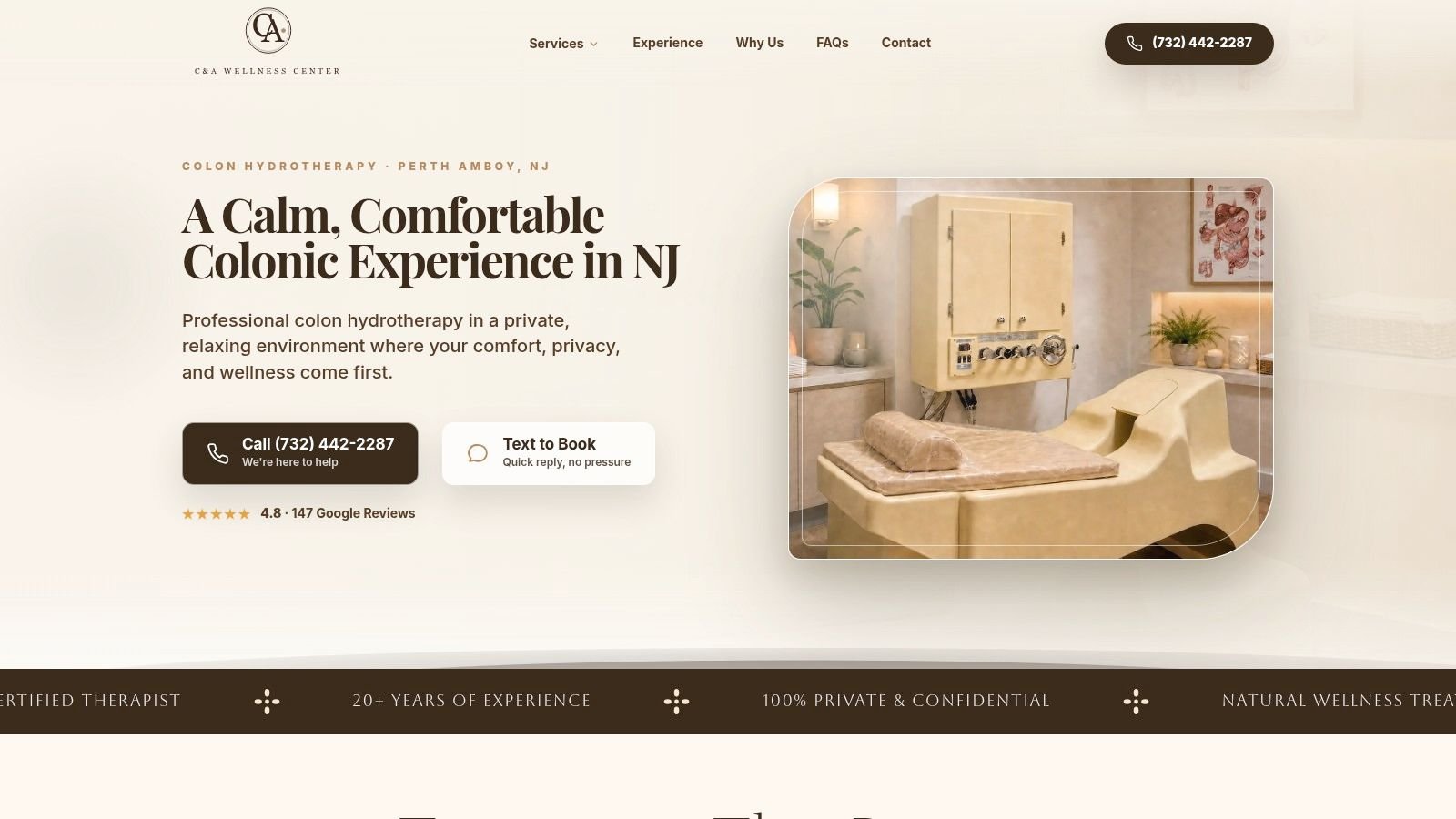
If you’re looking for digestive health services that feel less clinical and more supportive, starting local can make the first step easier. You don’t have to force yourself into an environment that immediately raises your stress level. You can choose a setting built around privacy, explanation, and comfort.
If you’re ready to ask questions, learn what a session involves, or book a private appointment, contact C&A Wellness Center. You can call or text for no-pressure guidance and find out whether a wellness-focused visit fits your comfort level and goals.