
You wake up with a puffy face, tight rings, heavy legs, or a generally sluggish feeling that doesn't match how you slept. Maybe you're recovering from surgery, spending long hours sitting, or looking for a gentler way to feel more comfortable in your body. That's often when searches for lymphatic drainage benefits begin.
The treatment can feel appealing because it promises lightness without the intensity of deep-tissue massage. But lymphatic drainage isn't a universal detox, fat-loss treatment, or cure for unexplained swelling. Its most defensible uses are narrower, including selected cases of lymphedema, post-surgical swelling, and certain forms of edema, while broader wellness claims remain inconsistent in the available review evidence.
A calm, informed approach matters. In a private, therapist-led setting such as C&A Wellness Center, the conversation should begin with your goals, health history, and comfort, not with pressure to purchase a package. You'll learn what the lymphatic system does, where manual lymphatic drainage may add value, when compression or clinical care matters more, and how to place this gentle service alongside other self-care options in Central New Jersey.
Table of Contents
- Introduction to Feeling Lighter and More Balanced
- How Your Lymphatic System Works in Simple Terms
- Evidence Backed and Commonly Reported Lymphatic Drainage Benefits
- When Lymphatic Drainage Helps Most and When Other Options Work Better
- What to Expect During Your First Lymphatic Drainage Session
- How Lymphatic Drainage Complements Colon Hydrotherapy Sauna and Ionic Foot Detox
- Safety Contraindications Frequency and Next Steps at C and A Wellness Center
Introduction to Feeling Lighter and More Balanced
Morning puffiness can be unsettling, especially when it arrives with a heavy or slow-moving feeling. You may notice that shoes fit differently, your abdomen feels full, or your face looks swollen after a long day, travel, illness, or a period of limited movement. Those sensations can have many causes, so they shouldn't automatically be labeled “lymph stagnation.”
The lymphatic system is one part of your body's fluid-management and immune network. When movement, breathing, muscle activity, or recovery from a procedure changes, fluid can feel less evenly distributed. A gentle session may help some people feel more comfortable, but that experience doesn't prove that the body has released harmful toxins or that fat has been removed.
The most helpful reframe is simple: lymphatic drainage is supportive care, not an extreme cleanse. Manual lymphatic drainage, often called MLD, uses light, rhythmic skin movements rather than forceful kneading. The intention is to encourage fluid movement through available lymphatic pathways while keeping the experience quiet and tolerable.
A realistic starting point
Suppose you're dealing with mild post-procedure puffiness. A trained practitioner may discuss whether lymphatic-focused care is appropriate, what your medical provider has cleared, and whether compression, walking, or another component of care belongs in the plan. If you have persistent, painful, one-sided, or rapidly worsening swelling, medical assessment comes before a wellness appointment.
People also seek treatment for relaxation, temporary facial de-puffing, or a sense of bodily ease. Those goals can be valid as personal comfort goals, but they're different from treating diagnosed lymphedema. Keeping that distinction clear protects you from inflated promises and helps you choose the right level of care.
What this guide can clarify
You'll see the benefits separated into stronger clinical evidence, more limited evidence, and commonly marketed claims that need caution. You'll also get a practical picture of a first session, learn why gentle pressure differs from conventional massage, and consider how lymphatic drainage fits with sauna, colon hydrotherapy, and ionic foot detox.
The aim isn't to make you anxious about wellness services. It's to give you enough context to ask good questions, recognize red flags, and decide whether this approach makes sense for your body and your reason for seeking support.
How Your Lymphatic System Works in Simple Terms
Think of your tissues as neighborhoods connected to a slow-moving river system. Fluid leaves tiny blood vessels and enters the spaces around cells. The lymphatic network collects some of that extra fluid, along with proteins and immune-related material, then carries it toward lymph nodes and eventually back into the bloodstream.
The lymph nodes act like inspection and filtration stations along the route. They don't function like a household drain that flushes every unwanted substance from the body. They help process lymph as it travels through the immune system, while the liver and kidneys handle major detoxification work.
Why flow can slow
Blood has the heart as a central pump. Lymph doesn't have an equivalent single pump, so movement depends heavily on muscle contractions, breathing, body position, and the natural action of lymphatic vessels. Long periods of sitting, illness, surgery, or damage to lymphatic pathways can make fluid movement less efficient.
That doesn't mean a healthy person has a “clogged lymph system” that needs regular flushing. It means fluid balance can change for many reasons, and a qualified professional should assess ongoing or unusual swelling rather than treating a social-media label as a diagnosis.
Why the touch is so light
Manual lymphatic drainage works at the superficial skin level. A practitioner uses gentle stretching, circular movements, and a deliberate direction to encourage fluid toward functioning pathways. Pressing harder isn't automatically more effective. In fact, aggressive pressure can feel inappropriate for swollen, healing, or sensitive tissue.
Regular massage often targets muscles and fascia with kneading, compression, or deeper strokes. MLD follows a different logic. The practitioner may prepare central areas before addressing a puffy region, helping create a route for fluid to move rather than pushing directly into the area that feels congested.
You might notice a slow rhythm, warmth from the therapist's hands, or a subtle sense of release. You shouldn't expect painful pressure, bruising, or a dramatic “purge.” The body's fluid systems are more like a network of small channels than a blocked pipe that can be blasted open.
Evidence Backed and Commonly Reported Lymphatic Drainage Benefits
The phrase lymphatic drainage benefits can point to several very different outcomes. Reduced discomfort in a selected clinical population is not the same as immune support in a healthy person, and temporary de-puffing is not the same as fat loss. Separating those outcomes helps keep a pleasant session from being described as proof of effects that research has not established.
Tier one, the clearest clinical signals
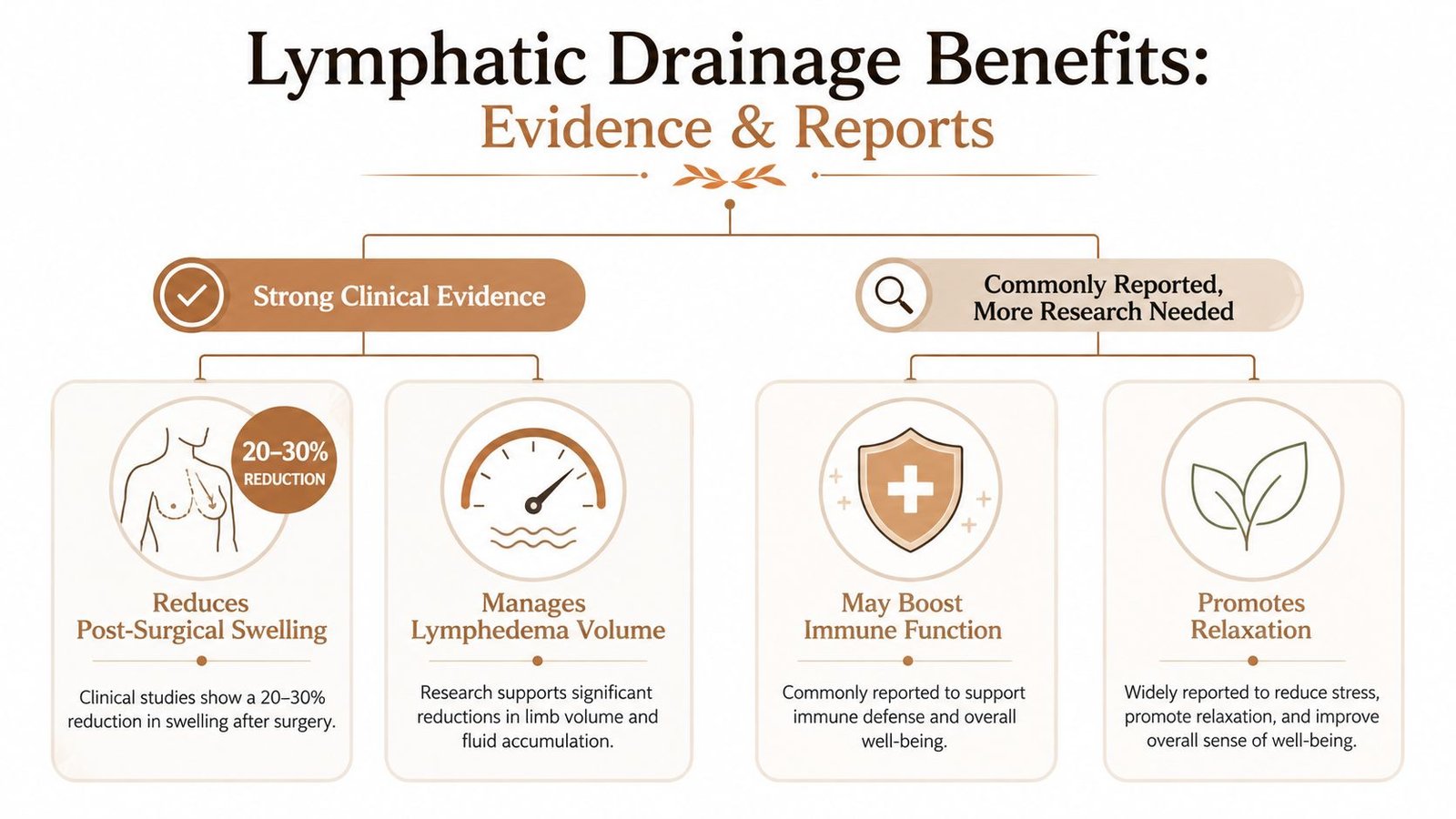
Breast cancer-related lymphedema is one of the most studied settings. A 2022 meta-analysis of 11 randomized controlled trials involving 1,564 patients found that MLD was associated with a statistically significant reduction in the incidence of breast cancer-related lymphedema, with RR = 0.58, 95% CI 0.37–0.93, P = .02, and a significant decrease in pain intensity, with SMD = -0.72, 95% CI -1.34 to -0.09, P = .02 according to the PubMed-indexed analysis.
The same analysis did not find statistically significant improvements in limb volume or quality of life. That distinction matters. The strongest signal is in selected oncology settings and symptom relief, not a promise that every person will see visible swelling go down.
Post-surgical and injury-related edema can also be a reasonable topic for discussion, especially when a medical provider has already cleared treatment. Reviews have described possible value in certain forms of acute edema and early post-operative care, but the evidence is uneven and does not support presenting MLD as a substitute for surgical follow-up or prescribed rehabilitation as summarized in a systematic review.
Evidence-based takeaway: MLD can be a helpful adjunct for selected swelling and pain concerns, but it is not a stand-alone cure or a universal body detox.
Tier two, possible comfort and appearance effects
Some clients report feeling less tight, less heavy, or more relaxed after a gentle session. Facial puffiness or temporary fluid retention may appear reduced, but that change should be described as a fluid-related effect, not body-fat reduction. Claims about cellulite, glowing skin, immunity, or broad inflammatory improvement need careful qualification because evidence varies by condition and by outcome.
People often notice the difference most clearly in how they feel, not in a dramatic physical change. A session may create a sense of lightness or ease, especially when swelling is mild and the body is already supported by movement, hydration, and rest.
Tier three, wellness marketing that needs skepticism
“Detox,” “immune boost,” and “slim-down” are common promotional phrases. They are also easy to misunderstand. The evidence for broad claims that lymphatic drainage improves immunity, removes overall toxins, or creates lasting cosmetic weight loss remains inconsistent, and the broader review literature does not justify treating those promises as settled facts.
A relaxing treatment can still have personal value. The key is to describe that value accurately. If your goal is calm, temporary comfort, or a soothing ritual, say so. If your goal is to manage diagnosed lymphedema, coordinate with a clinician and consider the full treatment plan.
When Lymphatic Drainage Helps Most and When Other Options Work Better
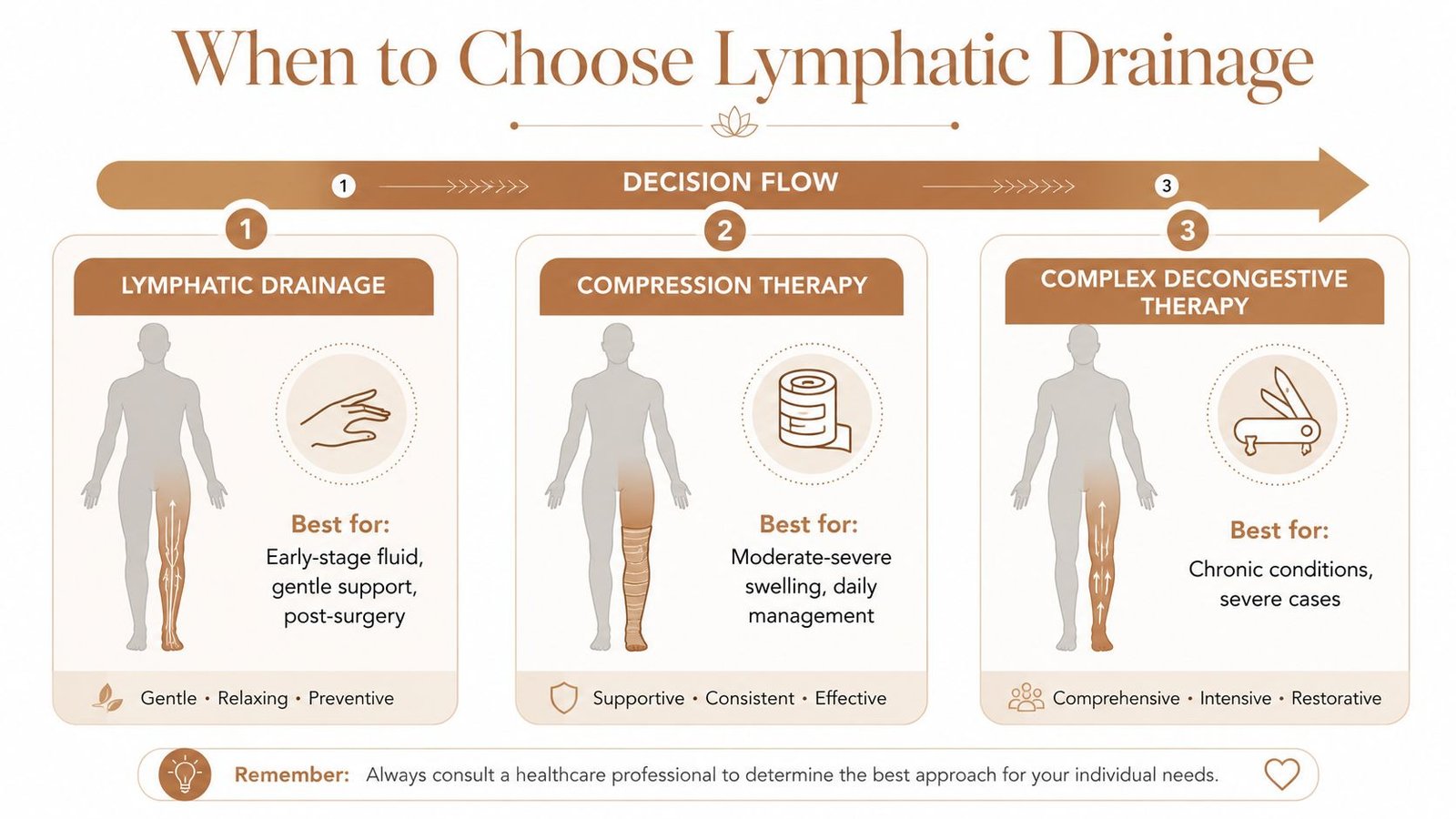
Lymphatic drainage tends to make the most sense when it fills a specific gap. It can offer gentle support for early or mild fluid buildup, ease a feeling of heaviness, or sit alongside a recovery plan that already includes movement and medical guidance. It makes less sense as a substitute for compression or full decongestive care when swelling is persistent, moderate to severe, or tied to a diagnosed lymphatic disorder.
An earlier systematic review found that studies measuring arm-volume change reported a weighted mean difference of 75.12 mL, but the result wasn't statistically significant, with a 95% CI of -9.34 to 159.58. The authors concluded that manual lymphatic drainage alone was unlikely to produce a meaningful reduction in lymphedema volume when added to compression-based therapy in the published review.
Matching the tool to the need
| Situation | Option that may matter most | Where MLD may fit |
|---|---|---|
| Mild or early fluid accumulation | Gentle movement and individualized guidance | A possible adjunct |
| Ongoing diagnosed lymphedema | Compression and complete decongestive therapy | Supportive, not standalone |
| Recovery after a procedure | Surgeon-approved rehabilitation | Consider only after clearance |
| General relaxation | Rest, breathing, and a calming session | A comfort-focused choice |
| Unexplained or worsening swelling | Medical evaluation | Don't self-treat first |
Compression helps provide external support for fluid management, like a steady wrap that helps guide water where it belongs. Exercise activates the muscle pump, while skin care and education reduce complications in decongestive therapy. A recent evidence summary also describes compression as having the strongest effect on swelling reduction, with MLD offering a smaller added benefit and possible support for pain, discomfort, or function in this evidence review.
Results can also be temporary. If the underlying cause remains, fluid may return after a session. That does not make the treatment useless, but it does mean you should judge it by the goal you set, such as comfort or short-term support, rather than expecting permanent structural change.
If your wider routine includes digestive wellness, you can review colon hydrotherapy in New Jersey separately. It addresses a different area of self-care and should not be presented as interchangeable with lymphatic treatment.
What to Expect During Your First Lymphatic Drainage Session
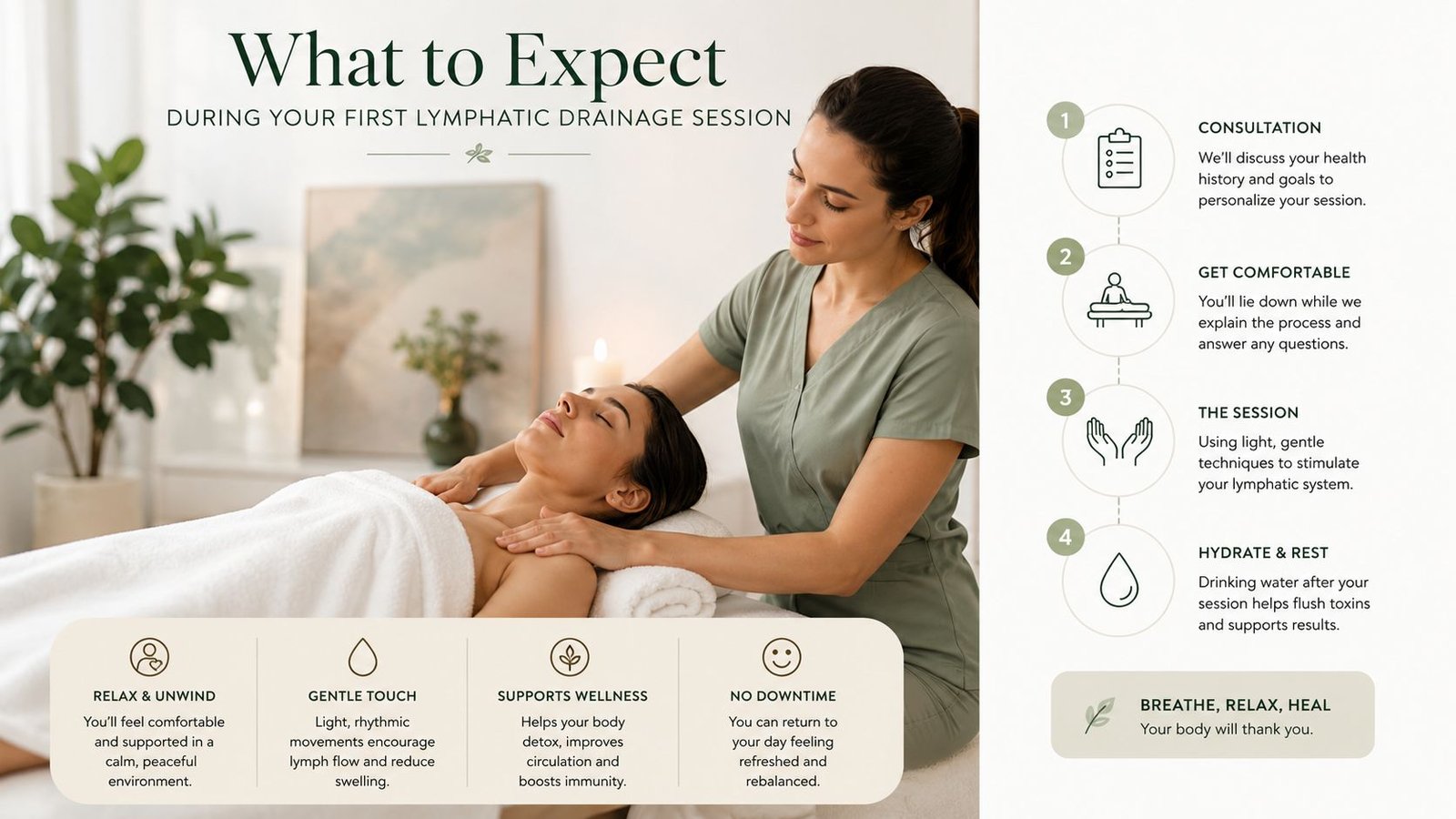
A first appointment should feel more like a careful conversation followed by gentle bodywork than an endurance test. You'll usually discuss why you're seeking treatment, where you notice puffiness or heaviness, whether a procedure or diagnosis is involved, and what your medical provider has advised.
Before the hands-on work
Wear comfortable clothing and arrive ready to share relevant health information. Don't hide recent procedures, unexplained swelling, skin problems, medication changes, or a history of blood clots. A reputable practitioner should explain what the session can and can't address before beginning.
You'll be positioned for access and comfort, with privacy maintained throughout. The practitioner may work around the neck, chest, abdomen, arms, legs, or another area based on your goals and training. You should be able to ask for adjustments at any point.
During the session
The touch is typically light, slow, and rhythmic. You may feel skin stretching rather than muscle kneading, along with warmth, quiet pressure, or a calming repetitive pattern. Pain, forceful manipulation, and bruising aren't signs that the treatment is working better.
A systematic review of 17 studies involving 867 women and 2 men found some trials reporting reduced lymphedema incidence and improved volume or symptom outcomes, but benefits were inconsistent overall. It found no reliable added benefit in moderate-to-severe disease when MLD was paired with complex decongestive therapy as reported in the PubMed-indexed review. That evidence supports a measured approach, particularly for early-stage concerns.
Aftercare and your comfort check
Afterward, drink normally according to your health needs, move gently, and notice how your body feels without trying to force a result. Some people describe lightness or relaxation, while others notice little immediate change. Neither response alone tells you whether a longer-term care plan is appropriate.
Keep these practical cues in mind:
- Normal comfort cues: Gentle touch, relaxation, and a non-painful sense of movement.
- Useful questions: What is the purpose of this session, and how does it fit with compression, exercise, or medical care?
- Reasons to pause: New pain, sudden shortness of breath, fever, redness, rapidly increasing swelling, or feeling acutely unwell.
- Clinical coordination: If you're receiving cancer treatment, recovering from surgery, or managing heart, kidney, or vascular disease, confirm clearance before booking.
For local service details, you can review lymphatic drainage therapy and ask how the appointment is conducted before committing.
How Lymphatic Drainage Complements Colon Hydrotherapy Sauna and Ionic Foot Detox
A wellness routine works best when each service has a clear role. Lymphatic drainage focuses on gentle support for fluid movement. Far-infrared sauna sessions offer a quiet heat-based relaxation experience, while colon hydrotherapy and ionic foot detox are separate wellness services with their own expectations and limits.
That separation matters. The clearest clinical support for lymphatic drainage appears in specific settings such as lymphedema, post-surgical swelling, and some acute edema cases. Broader claims about immunity, toxin removal, or cosmetic slimming are less consistent and belong in a lower confidence tier rather than a guaranteed result.
A gentle Central New Jersey sequence
A calm sequence often starts with a consultation, then one primary service rather than several unfamiliar treatments in the same visit. That gives you room to notice how your body responds. A therapist can also help you decide whether lymphatic-focused care should come before or after another service, especially if you are recovering from a procedure or managing a medical condition.
C&A Wellness Center in Perth Amboy offers private, one-on-one appointments with an I-ACT certified therapist who has more than 20 years of experience. Its listed services include colon hydrotherapy, far-infrared sauna, ionic foot detox baths, body wraps, ear candling, leech therapy, ultrasonic cavitation, and lymphatic drainage, with appointments available daily from 8 AM to 3 PM at 416 Washington St. These details describe access and service format, not proof that every service creates a medical detox effect.
Keep the routine sustainable
A practical plan usually stays simple. Occasional relaxation services, regular walking, comfortable hydration, and clinician-directed compression when medically indicated often fit better than trying to explain every tired or puffy day as toxic buildup. Lymphatic care works more like clearing a small drain than forcing a full-body reset. If the goal is comfort, start there. If the goal is symptom support, choose the least complicated option that matches it.
For people exploring foot-focused wellness, ionic foot detox information can help clarify how that service differs from lymphatic drainage. The two should not be blended into one promise.
Safety Contraindications Frequency and Next Steps at C and A Wellness Center
A gentle session still is not right for everyone. If you have an active infection, a suspected or known blood clot, an uncontrolled heart or kidney condition, or swelling that is changing quickly, pause and get medical guidance first. Cancer-related care, recent surgery, damaged skin, and more complex medical histories also need direct coordination with your healthcare team so the treatment plan matches what your body can safely handle.
A practitioner should ask questions, explain what the service involves, use clean professional equipment, and respect your right to stop at any point. A wellness visit should not replace medical evaluation for one-sided swelling, significant pain, chest symptoms, fever, or sudden changes in function.
Choosing a reasonable frequency
There is no single schedule that fits everyone. The right frequency depends on why you are coming in, whether the swelling is mild or persistent, how your body responds, and whether compression, exercise, or complex decongestive therapy is already part of your care.
For relaxation, occasional sessions may be enough. For diagnosed lymphedema or post-surgical swelling, frequency should follow medical advice instead of a generic package suggestion. Evidence summaries note that MLD alone often does not meaningfully reduce limb volume in many cases, though it may still support pain, discomfort, or function as summarized in the evidence review.
At 416 Washington St. in Perth Amboy, C&A Wellness Center offers a private setting where you can talk through your goals before selecting a service. Clear questions and medical clearance matter more than promises of dramatic results.
Contact C&A Wellness Center by phone or text to discuss whether lymphatic drainage fits your goals and your current care plan. The center offers private, one-on-one wellness appointments in Central New Jersey, including lymphatic drainage and complementary services, with calm guidance before you schedule.