
You may be reading this because your current self-care routine feels scattered. You try to eat better, maybe book a massage once in a while, maybe look up colon hydrotherapy, sauna sessions, or body contouring, but it's hard to tell what belongs together and what doesn't. Often, individuals aren't lacking effort. They're lacking a clear map.
That's where integrative health and wellness becomes useful. Instead of treating every symptom, stressor, or goal as a separate project, it helps you look at your body and daily habits as one connected system. For a first-time client, that shift matters. It turns wellness from a random collection of treatments into a guided process with purpose, timing, and safety checks.
Table of Contents
- Understanding Integrative Health and Wellness
- Core Principles and Scientific Evidence
- Non Invasive Therapies in an Integrative Routine
- Standards for Safety and Professional Credentials
- How to Choose the Right Integrative Provider
- What to Expect as a First Time Client at C&A Wellness
- Common Questions About Complementary Therapies
Understanding Integrative Health and Wellness
Integrative health and wellness means combining conventional care with complementary, non-invasive services in a thoughtful way. It isn't about replacing your doctor with a trend. It's about asking a better question: what combination of support makes sense for your body, your symptoms, your schedule, and your comfort level?
A simple way to think about it is this. Conventional medicine is often strongest when you need diagnosis, testing, or treatment for disease. Complementary care can help support how you feel day to day, including stress, tension, digestive comfort, relaxation, body care, and routine building. Integrative care tries to make those pieces work together instead of pulling in different directions.
What it looks like in real life
A fragmented routine looks like this: you feel bloated, you're sleeping poorly, your stress is high, and you book random services whenever you feel desperate. An integrative routine looks more like a coordinated plan. You talk through your goals first. You consider what feels realistic. Then you choose a sequence of services that support those goals without overdoing it.
That's why private, one-on-one care matters for many first-time clients. If you're considering something unfamiliar, such as colon hydrotherapy, infrared sauna, ear candling, or ultrasonic cavitation, you usually need more than a menu of services. You need context. You need someone to explain what the session is for, what it isn't for, how to prepare, and whether it fits your health picture.
Practical rule: A therapy becomes more useful when it fits into a plan. Without a plan, even a calming service can feel confusing.
The partnership piece
Integrative care works best when the client isn't passive. You share your health history, medications, comfort concerns, and goals. The practitioner uses that information to shape the experience. That relationship is a big part of what people miss when they try to piece together wellness advice from social media clips and generic blog posts.
If you're new to this world, start with one idea: you don't need to know everything before booking a consultation. You just need to understand that good integrative care is personalized, paced, and grounded in communication.
Core Principles and Scientific Evidence
Some wellness terms get used so loosely that they stop meaning much. Integrative health is more useful when you strip it down to its actual principles and ask whether those principles lead to measurable outcomes.

What makes care integrative
Integrative care usually includes four ideas:
- Whole-person focus means looking beyond a single complaint. Digestive discomfort, poor sleep, chronic stress, and low energy often overlap in daily life.
- Evidence integration means using what is known from research while still tailoring care to the individual.
- Patient partnership means the person receiving care helps shape the plan.
- Prevention and routine building means the goal isn't only short-term relief. It's also steadier habits and better day-to-day function.
Those ideas line up with broader changes in how people think about wellness. The global wellness economy doubled to $6.8 trillion in 2024, reflecting a 7.9% annual increase, and over 80% of consumers now consider gut health critical to overall well-being, according to the Global Wellness Institute wellness economy monitor. That doesn't prove every therapy works for every person. It does show that more people are actively seeking approaches that connect digestion, lifestyle, stress, and preventive care.
What the evidence shows
The most helpful studies don't just say people liked integrative care. They show changes in symptoms and function.
In a real-world cohort of 1,047 patients receiving 12 months of integrative primary care, fatigue scores on the Fatigue Severity Scale improved by 26%, with mean scores changing from 4.3 to 3.2 (p < .001), alongside improvements in quality of life, work productivity, and overall well-being in the University of Arizona Integrative Health Center study.
That matters because fatigue is one of those symptoms that can flatten everything else. When people feel worn down, they often stop exercising consistently, eat more reactively, and lose momentum with healthy routines. An improvement in fatigue can affect much more than energy alone.
A separate 2024 prospective study reported that a single encounter with integrative health and medicine modalities produced mean reductions in pain by 2.50 points, stress by 3.22 points, and anxiety by 3.05 points. It also found that 69.5% of patients achieved at least a 2-unit pain reduction, 82.6% achieved at least a 2-unit stress reduction, and 80.7% achieved at least a 2-unit anxiety reduction after one session in the outpatient integrative health study published by SAGE.
Integrative care is not just an aesthetic lifestyle choice. In the right setting, it can produce measurable symptom relief.
For a first-time client, the takeaway is simple. A good integrative framework doesn't ask you to guess. It starts with your actual concerns, then pairs those concerns with therapies, pacing, and follow-up that make practical sense.
Non Invasive Therapies in an Integrative Routine
Many people hear a list of therapies and assume they all do roughly the same thing. They don't. A better approach is to group them by purpose. Once you do that, the menu starts making sense.
How different therapies fit different goals
Some services are mainly about digestive support and internal comfort. Colon hydrotherapy usually falls into this category. People often explore it when they want a guided wellness session centered on bowel cleansing and a reset-style routine. It's not the same as a spa add-on, and it shouldn't be treated casually. It works best when preparation, privacy, and pacing are part of the appointment.
Other services focus more on heat, relaxation, and recovery. Far-infrared sauna sessions often fit here. Many clients use sauna time to create a quiet pause in the week, especially when stress has been accumulating physically. If you're comparing local options, this overview of infrared sauna sessions near Perth Amboy helps show how people often build sauna into a broader wellness routine.
Then there are services aimed at surface-level support or body-care goals. Body wraps are a good example. Herbal wraps and Dead Sea mineral wraps are often chosen by people who want skin-focused care and a more restorative, slow-paced session. Ultrasonic cavitation belongs to a different category. It's typically considered by clients interested in a non-surgical body contouring approach.
A few therapies are highly specific and need especially careful discussion before booking. Ear candling and leech therapy are two examples. These aren't services to book because someone online said they were “detoxing.” They require questions about comfort, health history, and fit.
Mainstream wellness content often gives one-size-fits-all guidance, which can leave people unsure whether therapies such as ultrasonic cavitation or ear candling are even appropriate for them, as noted by NewYork-Presbyterian's explanation of personalized integrative health.
A simple routine example
A routine doesn't need to be complicated. It just needs a reason.
| Therapy | Primary Benefit | Session Duration | Ideal Frequency |
|---|---|---|---|
| Colon hydrotherapy | Digestive-focused cleansing support | Varies by appointment plan | Based on practitioner guidance and client goals |
| Far-infrared sauna | Relaxation and heat-based wellness support | Varies by appointment plan | Often used as part of a regular routine |
| Ionic foot detox | Calm, low-effort relaxation support | Varies by appointment plan | Often paired with other wellness visits |
| Body wraps | Skin smoothing and nourishment | Varies by appointment plan | Used periodically depending on goals |
| Ultrasonic cavitation | Non-surgical body contouring support | Varies by appointment plan | Typically scheduled as a series when appropriate |
| Ear candling | Targeted complementary wellness service | Varies by appointment plan | Only after discussion of suitability |
| Leech therapy | Specialized supervised complementary care | Varies by appointment plan | Only when professionally guided |
One example might look like this:
- Early week reset: A digestive-focused appointment when you want structured support and a private setting.
- Midweek decompression: A quieter service such as sauna or ionic foot detox when stress is high and you don’t want a demanding session.
- Weekend body-care visit: A body wrap or cavitation appointment when your goal is skin care or contour-focused maintenance.
The 2024 outpatient study mentioned earlier found that a single integrative session can reduce pain and stress meaningfully for many patients. That’s useful here because it supports a practical point. Even one well-chosen appointment can help someone feel more settled, which makes it easier to stick to a wider routine instead of quitting after a chaotic week.
Standards for Safety and Professional Credentials
People usually don’t worry about safety because they’re skeptical. They worry because they’re sensible. If a therapy is unfamiliar, your first question should be whether the person providing it has the training, equipment, and judgment to do it responsibly.
Why personalization matters
Safety in integrative wellness isn’t just about whether a room looks clean. It also depends on whether the provider adjusts the session to the individual.
That’s especially important because mainstream wellness content often skips the personalized safety piece for therapies like ultrasonic cavitation and ear candling, leaving clients uncertain about compatibility with their health. Generic instructions don’t help much if you have a medical condition, take medication, or don’t know what questions to ask.
A clean facility matters. A thoughtful consultation matters just as much.
For example, a provider should be willing to ask about recent procedures, ongoing symptoms, medications, skin sensitivity, and comfort level before beginning a session. That conversation isn’t a formality. It’s where contraindications and practical limits often show up.
What to verify before booking
Use a simple screening process. You don’t need clinical training to do this.
- Check credentials: Ask whether the therapist has formal certification relevant to the service. For colon hydrotherapy, that includes asking about I-ACT training.
- Ask about equipment: Professional equipment and clearly explained procedures are basic signs of seriousness.
- Look for privacy: One-on-one appointments in private rooms are often more appropriate for personal therapies than open-format settings.
- Ask how they prepare clients: A provider should explain hydration, clothing, timing, and aftercare in plain language.
- Listen to how they answer: Clear, calm answers usually signal a safer experience than vague reassurance.
If colon hydrotherapy is one of the services you’re researching, this page on colon hydrotherapy appointments in New Jersey shows the kind of service-specific details you should expect a provider to explain before you schedule.
At a basic level, safety means this: the therapist doesn’t treat every client like the same body walking through the door.
How to Choose the Right Integrative Provider
The right provider should make you feel informed, not pressured. That sounds obvious, but first-time clients often confuse friendliness with competence. You need both, and competence comes first.
A useful way to compare providers is to think like a careful shopper rather than a nervous patient. You’re not trying to impress anyone. You’re verifying whether the setting matches the service.
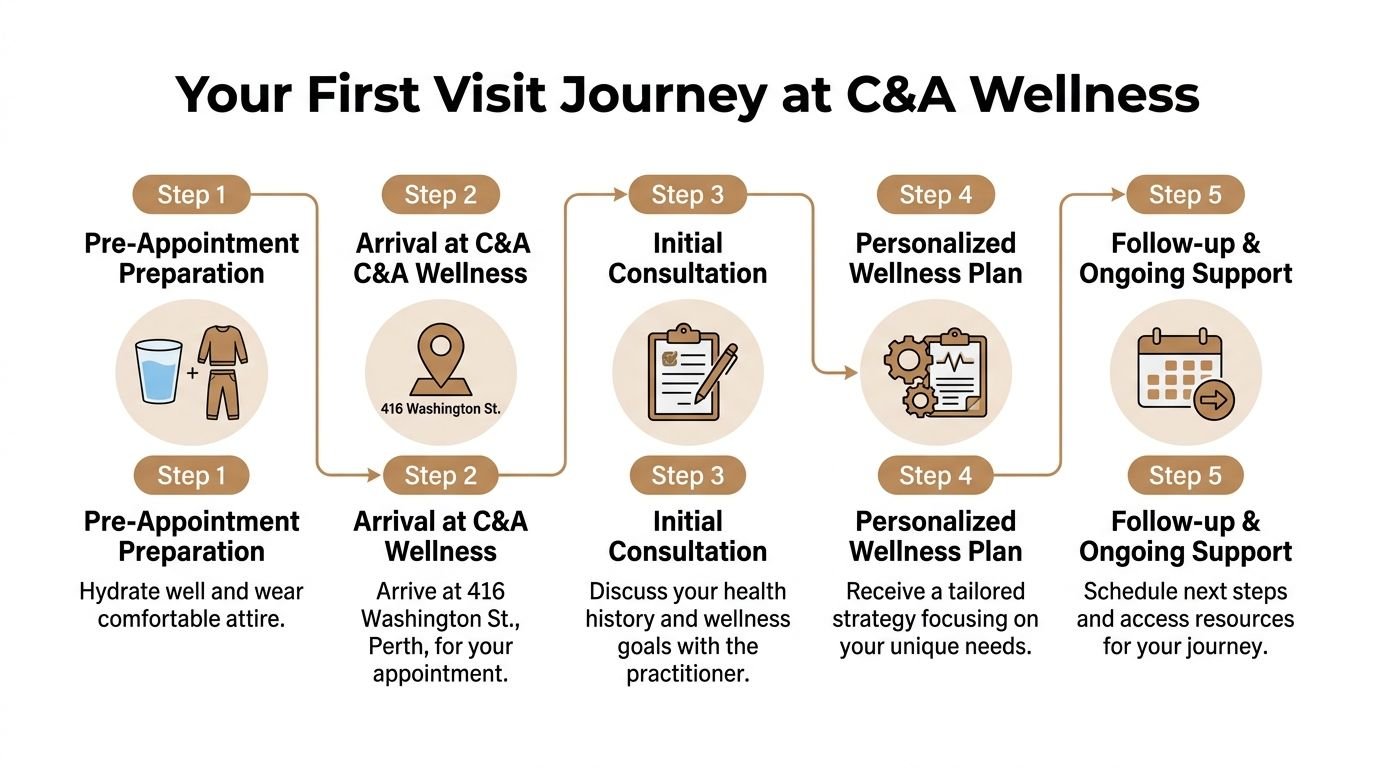
A practical provider checklist
Bring these questions with you or keep them on your phone:
- Are the credentials clear? Certifications, licenses where relevant, and service-specific training should be easy to confirm.
- Is the setting private and clean? For sensitive services, privacy isn’t a luxury. It’s part of care.
- Do they explain preparation well? You should know what to eat, drink, wear, and avoid before arriving.
- Do they ask about your health history? If they don’t ask, that’s a warning sign.
- Do they explain what the service can and can’t do? Balanced explanations are more trustworthy than exaggerated promises.
One local option is C&A Wellness Center, a Perth Amboy practice that offers private, one-on-one appointments for colon hydrotherapy and other non-invasive services, with an I-ACT certified therapist, daily morning hours, and scheduling by phone or text. That kind of factual detail is what you want from any provider you’re considering.
Cost and access questions worth asking
Cost is where many people get stuck. They assume integrative care is either fully premium or too hard to access if they’re on a budget. The situation is more varied.
Few public-facing resources explain integrative health equity or how sliding-scale clinics can reduce costs for underserved patients seeking services such as colon hydrotherapy or infrared sauna in areas like Central New Jersey, according to this PMC discussion of integrative health equity and access barriers.
Ask practical questions like these:
- Do you offer package options: Some providers have bundled appointments for clients building a routine.
- Are there quieter appointment windows: Flexible timing can make regular care easier.
- Can you refer out for lower-cost options: A good provider won’t act offended if budget matters.
- Are there teaching clinics nearby: Some chiropractic, naturopathic, or acupuncture schools may offer lower-cost care in certain categories.
The best provider for you isn’t the fanciest one. It’s the one that matches your goals, your comfort level, and what you can realistically maintain.
What to Expect as a First Time Client at C&A Wellness
First visits feel easier when you know the rhythm of the appointment before you walk in the door. Most anxiety comes from not knowing what happens first, what you’ll be asked, and whether there will be time to settle in.
The broader market has moved strongly toward in-person guided care. Wellness travel and in-person integrative services rebounded by over 30% from 2022 to 2023, according to this report on wellness tourism and integrative service growth. That makes sense. For many therapies, people want a real person to guide them, not a generic online checklist.
Before you arrive
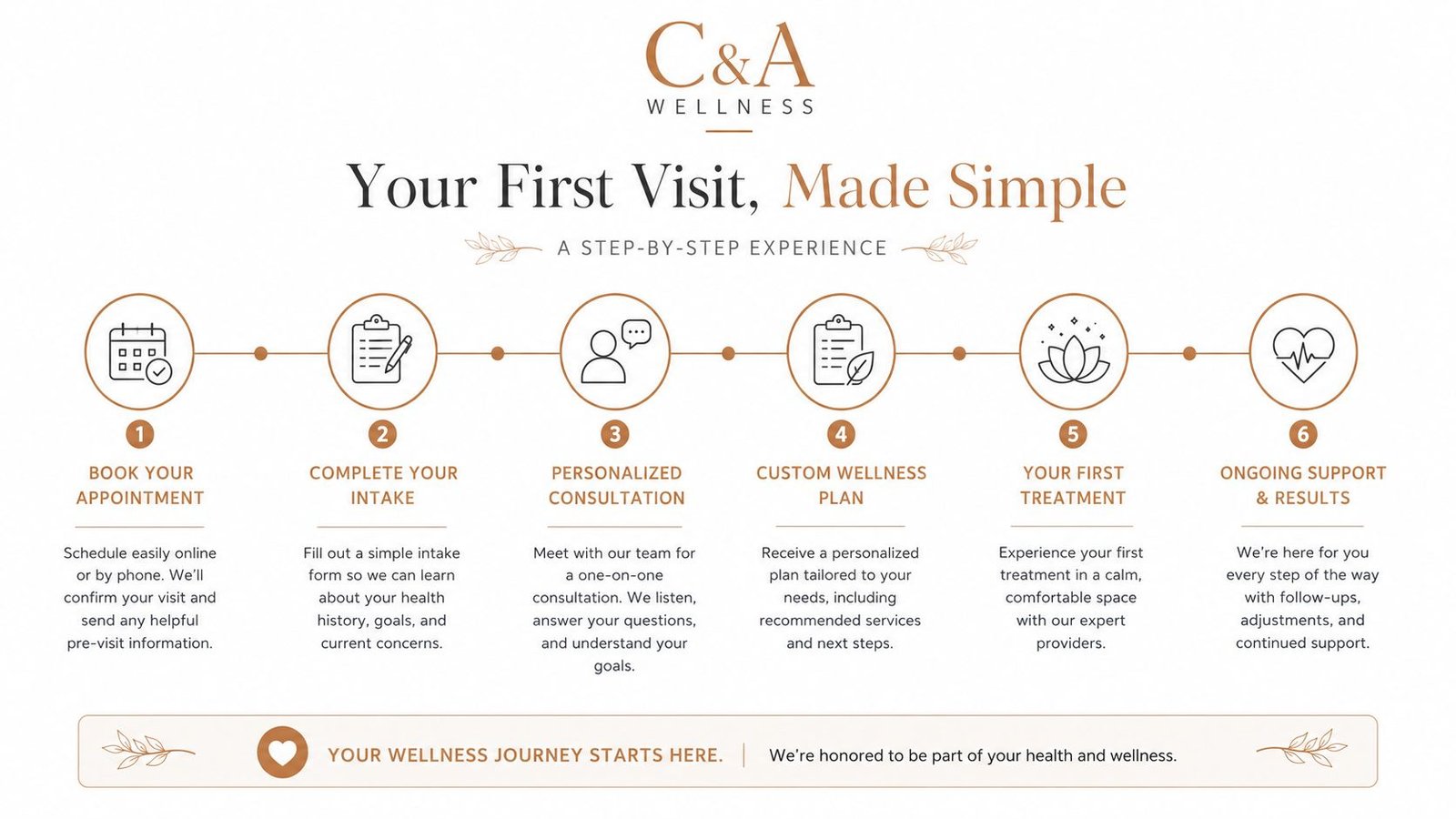
Preparation is usually simple. Hydrate well. Wear comfortable clothing. Avoid making your schedule so tight that you have to rush in or leave stressed.
The center is located at 416 Washington St., Perth Amboy, NJ and serves nearby communities including Edison, Woodbridge, Sayreville, South Amboy, Old Bridge, Carteret, South Brunswick, New Brunswick, and Metuchen. Appointments are typically arranged by phone or text, which tends to help first-time clients ask small questions before they commit.
If you want a service-specific preview of the visit flow, this guide to a private colonic session in New Jersey gives a helpful look at the kind of preparation and privacy details many people want to understand first.
During your visit
When you arrive, the first step is discussion. You’ll usually go over your goals, relevant health history, and any concerns about comfort or unfamiliar steps. A good one-on-one format aids this process, allowing you to ask the questions that feel too personal for a busier setting.
Sessions are conducted in private rooms with professional equipment. For colon hydrotherapy, the process uses warm, filtered water with therapist guidance. For sauna, ionic foot detox, body wraps, ear candling, leech therapy, or ultrasonic cavitation, the pace and setup depend on the service, but the same principle applies. You should know what is happening and why.
If you feel rushed to begin before you understand the process, pause and ask more questions.
After your session
Aftercare is part of the appointment, not an afterthought. You may be advised to hydrate, eat light meals, rest, or space out future sessions based on your response and goals. Some clients like to stack services in one visit. Others do better with one service at a time until they know how their body responds.
For local clients coming from Edison, Woodbridge, or nearby Middlesex County towns, morning hours can make planning easier. Some people prefer an earlier appointment before the day gets noisy. Others choose a day when they can go home afterward rather than jump back into errands.
The first visit doesn’t need to feel mysterious. It should feel guided, private, and paced to your comfort.
Common Questions About Complementary Therapies
How do I know where to start if I take medication
Start with a consultation, not a guess. Bring a full list of medications, supplements, and major health conditions. That helps the practitioner decide whether a therapy fits your situation or whether you should speak with your medical provider first.
Should I eat before a body wrap or sauna session
A light, comfortable meal is generally better than arriving overly full or completely depleted. Heavy eating right beforehand can make heat-based or wrap-based services less comfortable.
Can colon hydrotherapy interfere with prescription drugs
This is exactly the kind of question to raise before booking. Timing, digestive patterns, and your medication schedule all matter. Don’t rely on general internet advice when the answer depends on your health history.
What if I’m interested in more than one therapy
That’s common. The safest approach is to prioritize your main goal first, then build gradually. Starting with everything at once can make it hard to tell what helped and what felt like too much.
If you want help turning scattered wellness ideas into a clear, personalized plan, C&A Wellness Center offers private, one-on-one appointments in Perth Amboy for colon hydrotherapy and complementary non-invasive services, with room to ask questions before you book.