

You've just stepped out of your colonic feeling lighter, flatter, and maybe a little unsure about the next move. That's normal. The session does a lot of the work, but what you eat after colonic is what helps your body settle, rehydrate, and hold onto that clean, comfortable feeling without tipping into bloating or cramps.
The simplest approach is also the kindest one. Start with fluids, move to soft foods, keep portions small, and give your gut time to wake back up. That's the pattern I guide clients toward when they want recovery to feel easy instead of confusing, and it lines up with the consistent aftercare advice from major clinical and wellness sources such as Cleveland Clinic and University of Michigan Health. If you're looking for the same gentle support in person, C&A Wellness Center works with clients in a private setting and gives clear preparation and aftercare guidance from the start.
Table of Contents
- Your Guide to Post-Colonic Comfort and Care
- The First 24 Hours Your Top Priority
- Gentle Foods to Reintroduce First
- Foods to Avoid for a Comfortable Recovery
- A Sample 48-Hour Post-Colonic Meal Plan
- Beyond 48 Hours Supporting Long-Term Gut Health
Your Guide to Post-Colonic Comfort and Care
The moment a client stands up after a session, the same question usually follows, “What should I eat now?” They feel lighter, maybe pleasantly empty, and they do not want to undo that with the wrong meal. That is why post-colonic food choices matter. Your bowel has just done real work, and it needs a calm landing.

Practical rule: treat the first two days like a reset window, not a time to celebrate with heavy food.
The safest approach is straightforward. Rehydrate first, eat gently, and let fiber return in stages. Cleveland Clinic advises people to “push liquids more than usual for the first 24 hours” after colonoscopy prep, and it lists soft foods such as white rice, mashed potatoes, soup or broth, yogurt, and lean proteins as appropriate first-day foods in its post-procedure guidance (Cleveland Clinic). That same gentle-start logic is useful after a colonic, because the goal is the same, steady fluid replacement without asking the bowel to do too much at once.
A slow restart also helps you read your own body more clearly. If you have ever eaten too much too soon after a cleansing session, you already know the result, heaviness, gas, and a belly that feels louder than it should. A short, careful refeed protects comfort and helps the benefits of the session last longer, especially when you keep the next 48 hours simple and predictable. The practical version is easy to follow at home, and it fits well with the aftercare guidance given at our colon hydrotherapy center.
What a professional colon hydrotherapy session looks like
The First 24 Hours Your Top Priority
The first day after a colonic is a recovery window, and your body will usually do better with a calm restart. If you want to understand why that gentle approach matters, this professional step-by-step guide to how a colon cleanse works gives helpful context. The practical rule is simple. Rehydrate first, then add food in a way your bowel can handle without strain.
That means liquids come before solids. Start with water, herbal tea, or clear broth as soon as you get home, then keep sipping through the day. One aftercare guideline recommends 2 to 3 liters of fluids per day taken “little and often,” which matches the pace many people tolerate best after cleansing (Nation Health MD). The goal is not to force a large amount at once. It is to prevent the dry, tired feeling that can follow when the bowel has been flushed and fluid replacement lags behind.
Why liquids come before solids
A recently stimulated digestive tract usually responds best to a quiet restart. Liquids give hydration and a little electrolyte support without making the bowel work hard to break down dense food. Solid meals can wait for several hours, especially if your stomach still feels unsettled.
Filtered water is the default. Warm broth and mild herbal tea are often easier to sip steadily, and they can feel more soothing than cold drinks. If you feel hungry, resist the urge to jump straight to a full plate. A few swallows of broth, then a pause, usually settles better than a larger meal before your system is ready.
A simple first-day rhythm
- On waking: Start with a glass of water, then keep taking small sips through the morning.
- Midday: Add clear broth or a light herbal tea if plain water starts to feel monotonous.
- Afternoon: Keep fluids going, and avoid heavy snacks eaten out of boredom or habit.
- Evening: If your body is ready for food, keep it small, plain, and easy to digest.
Useful benchmark: if you are still thirsty, dry, or lightheaded, you likely need more fluid before you need more food.
Solid food can wait until your body gives a clearer signal. That pause is not deprivation, it is the part of aftercare that helps comfort hold and makes the next 48 hours easier to manage.
Gentle Foods to Reintroduce First
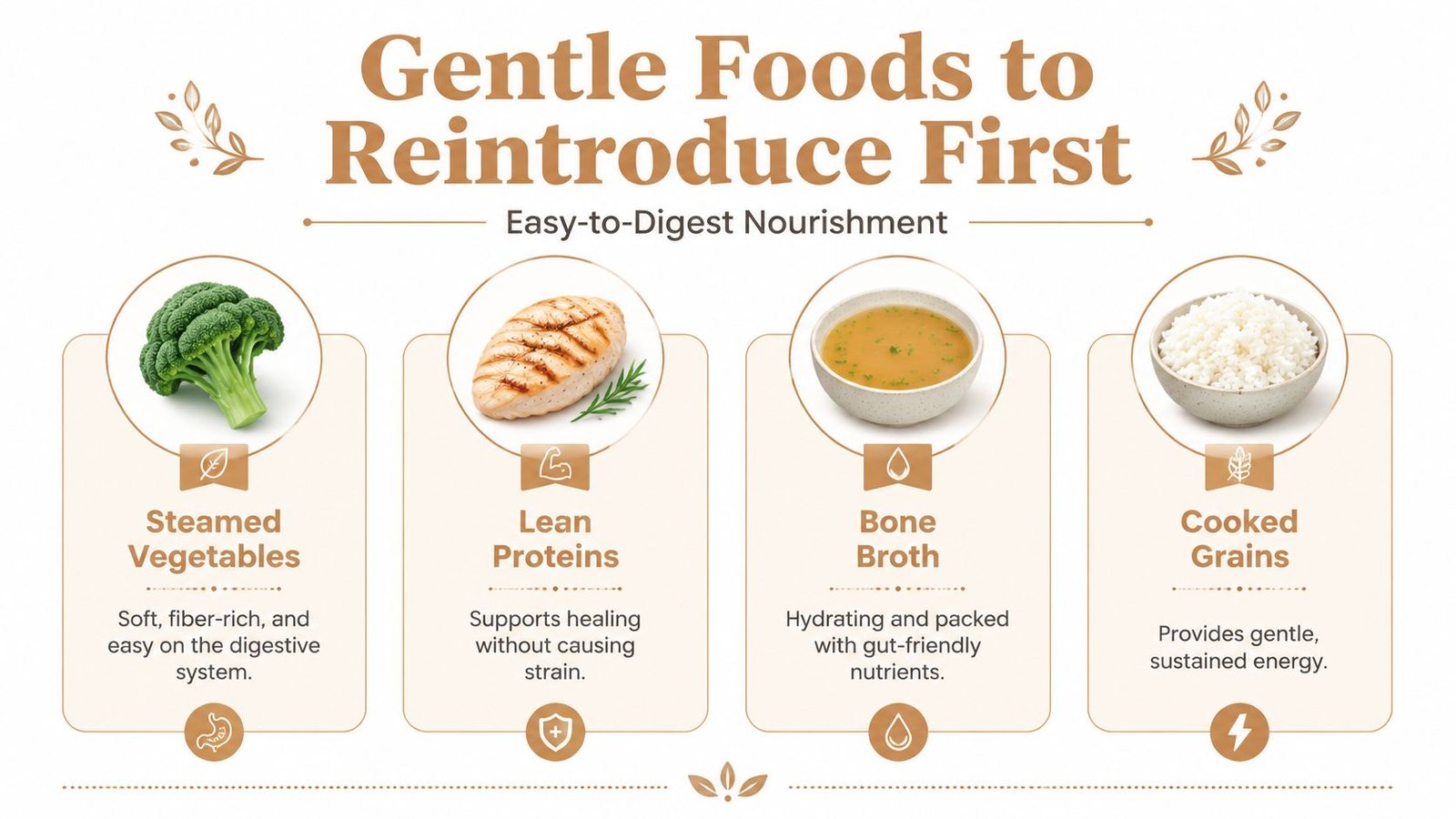
When you're ready to eat again, think soft, low-residue, and easy to chew. These foods help restore energy without asking your colon to work overtime. They also reduce the chances of gas and bloating that can happen when you rush back into rough, high-fiber meals.
Simple starches that settle well
Plain rice, mashed potatoes, and oatmeal are practical first choices because they're soft, familiar, and easy to digest. They give you a gentle source of energy without the scratchy texture or heavy fiber load that can feel too aggressive right after a session. If you want the least complicated option, white rice is usually easier than whole grains.
Lean proteins for steady recovery
A small serving of chicken, fish, or tofu can make a post-colonic meal feel complete without being hard on your system. Protein helps you feel satisfied, and it's easier on a sensitive gut when it's cooked in a basic manner rather than fried, spiced, or covered in rich sauces. Keep portions modest. You're feeding comfort, not trying to “make up” for anything.
Cooked vegetables, not raw bowls
The why matters most. Cooked vegetables are much easier to handle than raw ones because heat softens the texture and lowers the mechanical effort your bowel has to make. Broth-based soups with soft carrots, cooked squash, or well-steamed greens fit that pattern better than a raw salad piled high with crunch.
Cleveland Clinic's first-day soft-food list is a good practical reference here, and the same broad principle shows up across clinical-style guidance: keep the food simple, moist, and easy to move through the digestive tract (Cleveland Clinic). That approach lets you eat enough to feel normal again without overloading a gut that's still settling.
Foods to Avoid for a Comfortable Recovery
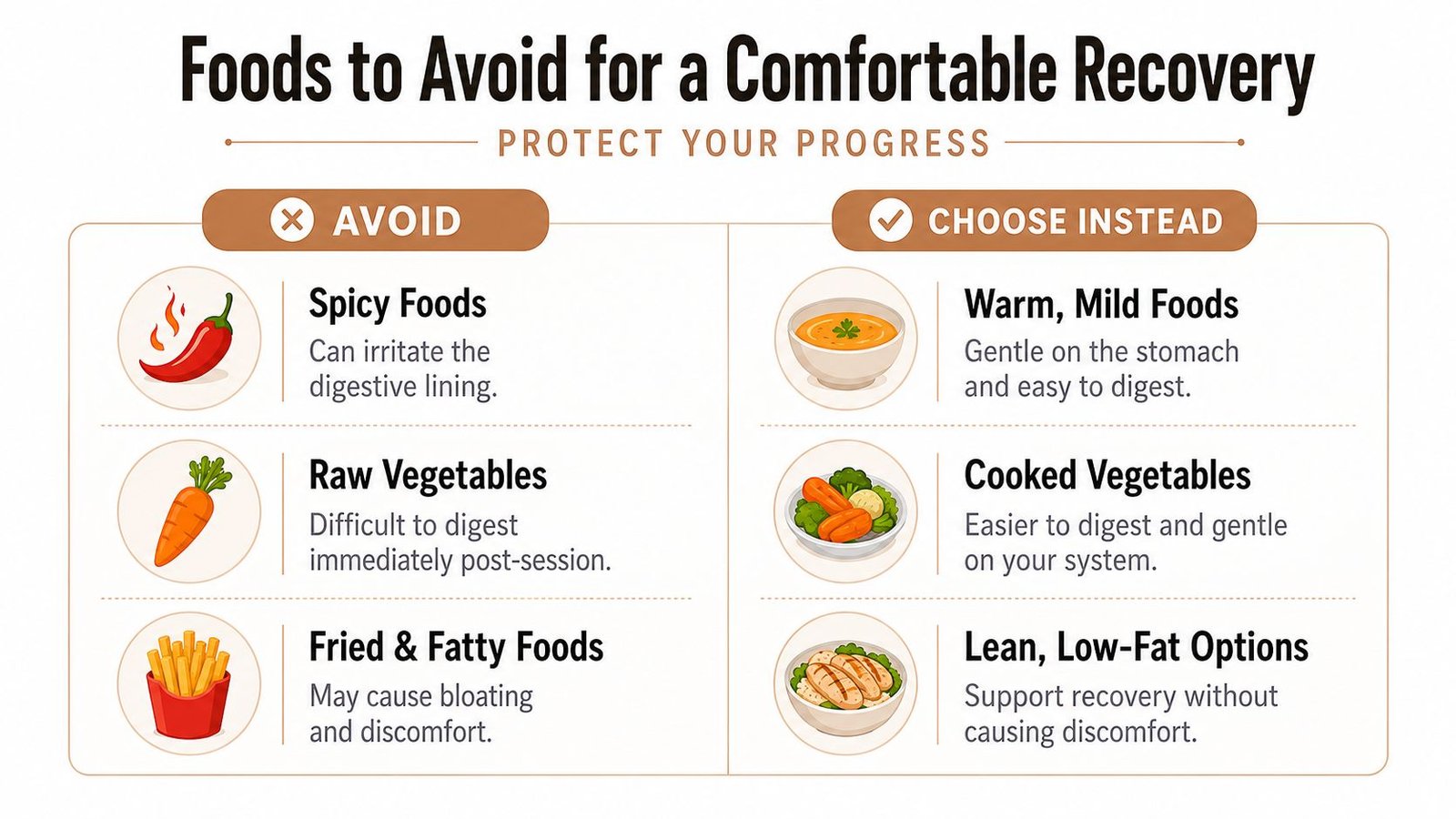
The most common mistake is going back to “normal” too fast. High-fermentable or mucosa-irritating foods can trigger gas, bloating, cramping, and discomfort, especially in the first 24 to 48 hours after a colonic (Cocoon Medical Spa). I'd rather see a client under-eat a little for one day than spend the evening regretting a heavy plate.
The main triggers to skip for now
Beans are a classic culprit because they're highly fermentable and can produce extra gas. Cabbage, cauliflower, and onions can do the same, which is why cruciferous and allium-heavy meals are usually a poor fit right after treatment. Caffeine and alcohol can be rough too, not just because they're stimulating, but because they can make hydration harder to maintain.
Why greasy and heavy foods backfire
Fried foods, fatty foods, and heavy dairy tend to sit longer and feel denser in a bowel that's looking for an easy restart. That can translate into sluggishness, nausea, or a vague stuffed feeling that lingers longer than you'd like. When the system is sensitive, grease is usually the fastest way to make comfort disappear.
What to reach for instead
The same aftercare guidance that warns against those triggers also points toward the safer bridge foods already covered, broth, soup, plain rice, mashed potatoes, cooked vegetables, and small portions of lean protein (Nation Health MD). If you want a quick check before eating, use this rule: if the food is spicy, greasy, raw, fizzy, or likely to ferment quickly, save it for later.
Comfort test: if a meal would be a challenge on a calm day, it's too much for the first 48 hours after a colonic.
A Sample 48-Hour Post-Colonic Meal Plan
The easiest way to take the guesswork out of recovery is to follow a simple progression. Start with liquids, then move into soft foods in small portions once your stomach feels settled. This isn't a strict diet, it's a template you can adjust based on hunger, comfort, and how your body responds.
| Time Frame | Focus | Sample Meal / Snack |
|---|---|---|
| First 4 to 12 hours | Liquids only | Water, herbal tea, clear broth |
| Later on day 1 | Soft, low-residue foods | Plain rice, mashed potatoes, soup, yogurt |
| Evening of day 1 | Light protein if tolerated | Small portion of lean fish or chicken with cooked vegetables |
| Day 2 morning | Gentle breakfast | Oatmeal or yogurt with a soft texture |
| Day 2 midday | Balanced soft meal | Steamed fish with mashed sweet potato |
| Day 2 later | Simple snack | Applesauce or plain yogurt |
How to read the plan
The early window is all about fluids because that's what your body needs most right away. Once you feel calm, add a soft meal with cooked starch plus lean protein, which usually settles better than a bowl of something mixed, spicy, or rich. By day 2, many people can handle a slightly more complete plate, but the texture should still be soft and the seasoning still mild.
If appetite is lower than expected
That's fine. You don't have to force a full schedule if you're not hungry. A few spoonfuls of broth, then a small serving of oatmeal later, can be enough for one day when your system wants a quieter pace.
If you feel bloated
Step back to liquids and smaller portions. Bloating is your body's way of saying the meal was too dense, too early, or too fermentable.
Keep the recovery window simple, and the transition back to regular eating usually feels smoother.
Beyond 48 Hours Supporting Long-Term Gut Health
After the first two days, the goal shifts from immediate comfort to rebuilding your usual eating pattern without rushing it. Add fiber gradually, one new food at a time, and pay attention to how your body feels after each change. That slower pace helps you spot which foods sit well and which ones bring back pressure, bloating, or loose stools.
Start with cooked vegetables, then move toward more complex plant foods only when the earlier choices feel settled. Fermented foods such as yogurt or kefir may fit well for some people because they can support a healthier digestive routine, but they are supportive foods, not a guarantee. If dairy does not agree with you, skip it for now and return to it later if your body handles it better. For ongoing structure, digestive health support and wellness services can also help you keep that gradual approach in place.
Consistency matters more than a perfect menu. Smaller meals, steady hydration, and a slow return to fiber usually work better than alternating between strict restriction and heavy eating. Guidance often used after digestive procedures also points toward 4 to 6 small meals per day, because spreading intake through the day is easier on an unsettled gut. A colonic is different from surgery, but the same practical idea holds, give digestion a lighter workload so comfort lasts longer.
For many clients, the long-term win is not a single ideal meal. It is learning which foods keep the body calm, which foods create pressure, and how to build a routine that supports digestive health instead of working against it. Careful follow-up and one-on-one guidance from a practitioner can help turn a good session into a routine that feels manageable and repeatable.
C&A Wellness Center in Perth Amboy offers colon hydrotherapy in a private room with a certified therapist, along with complementary wellness services that fit a gentle self-care routine. If you want calm, straightforward guidance on recovery and what to eat after colonic, visit C&A Wellness Center and set up a visit that matches your comfort level and schedule.