If you're living with IBS, you already know the pattern. A bloated morning turns into a guarded workday, you keep planning around bathrooms, and the foods you've already cut back on still don't always give you the relief you hoped for. That's usually the moment people start searching for colon hydrotherapy for IBS, not because they're chasing a trend, but because they want a practical answer for a body that feels hard to predict.
The honest answer is mixed. Colon hydrotherapy may feel more appealing when constipation, stool urgency, or incomplete emptying keep interrupting life, but the evidence is limited and the risks aren't imaginary. This guide separates the different IBS subtypes, shows where the research points, and helps you decide whether this is a cautious add-on to discuss with a clinician or something to skip.
Table of Contents
- When IBS Makes You Consider Colon Hydrotherapy
- What Colon Hydrotherapy Actually Is and How a Session Works
- What the Research Shows About IBS
- IBS Subtypes and Who Might Respond Differently
- Safety, Risks, and When to Say No
- Preparation, the Session, and Aftercare
- Alternatives and Complementary Therapies Worth Considering
- Choosing a Certified Therapist and Booking in Central New Jersey
When IBS Makes You Consider Colon Hydrotherapy
A lot of people reach this point after they've tried the usual basics. They've adjusted meals, watched trigger foods, maybe even tracked symptoms in a notebook, and still the day can swing from discomfort to urgency to constipation without much warning. That uncertainty is exhausting, and it makes any new option look worth a careful look.
Colon hydrotherapy usually enters the picture for one of two reasons. Some people hope it might ease the feeling of being “backed up.” Others are desperate for anything that might calm a gut that feels noisy, swollen, or unpredictable. That's why the question isn't just whether it sounds soothing. It's whether it fits your IBS subtype, your symptom pattern, and your tolerance for risk.
A useful way to think about it is this. If your colon feels like it's holding on too long, you may be looking for a short-term mechanical reset. If your gut already swings toward looseness, urgency, or cramping, the same approach can feel very different. One person's relief can be another person's flare.
Practical rule: If your first thought is “I need a bigger intervention,” pause and ask whether you're dealing with constipation, diarrhea, mixed symptoms, or a flare that should settle before you do anything else.
The rest of this guide keeps that distinction front and center. Instead of treating IBS as one single problem, it looks at what colon hydrotherapy might mean for IBS-C, IBS-D, and mixed IBS, and where the current evidence still leaves major gaps.
What Colon Hydrotherapy Actually Is and How a Session Works
Colon hydrotherapy is a professionally supervised rinse of the large intestine using warm, filtered water. In a well-run clinic, it's meant to be a controlled, private procedure, not a rough cleanse. A common way to picture it is a slow internal rinse rather than a power wash.
What happens in the room
The appointment usually starts with a private intake conversation. A therapist should ask about your bowel habits, surgeries, medications, and current symptoms before anything begins. Then you're draped for privacy, and a small rectal insert is used to introduce water while the therapist controls flow, temperature, and comfort.
During the session, the water goes in and out in cycles. Some clinics also use gentle abdominal massage to help movement along. The experience can feel like fullness, pressure, or a temporary urge to go, but it shouldn't feel rushed or rough. A patient-first explanation of the process is available in this professional step-by-step guide.
How it differs from a home cleanse
A home enema and a professional colonic are not the same thing. Home tools are usually smaller, shorter, and less customized. Professional hydrotherapy, when done properly, relies on a closed system, trained handling, and equipment designed for repeated clinical use. That matters because the goal isn't just to move stool, it's to do it with as much control and hygiene as possible.
A good clinic should be able to explain its equipment, sanitation process, and privacy standards before you book. If they can't describe those basics clearly, that's a warning sign. You don't need to be an expert to ask whether the setup is closed, single-use where appropriate, and easy to inspect.
What the Research Shows About IBS
The main IBS-specific data point comes from a small 2016 pilot study with 18 participants. In the IBS-C group, bowel movements increased from 1.68 to 3.78 per week (p < 0.001), and Bristol Stool Scale type 1–2 stools fell from 45% to 13% (p = 0.009) study report. In the IBS-D group, type 6–7 stools fell from 62% to 28% (p = 0.005) over roughly 7 days after treatment.
Those results are the kind that make people pause and pay attention. For someone with IBS-C, more bowel movements and fewer hard stools line up with the relief they are hoping for. For someone with IBS-D, fewer loose stools can sound reassuring at first glance. The catch is that this was a very small pilot study, so the findings are a signal, not a conclusion.
Why that signal still doesn't settle the question
The study design matters as much as the symptom changes. It had no control group, only 18 people, and only about 7 days of follow-up study report. That means it can show short-term change, but it cannot tell you whether the benefit would last, whether the result was partly placebo, or whether people with different IBS patterns would respond differently.
A broader review found only one prospective controlled trial meeting its criteria for defecation disorders, and it rated the evidence as very limited and poor quality. That same review also noted client costs of about ₤50–₤80 per session in the studies it examined systematic review and summary. Monash University's summary was equally cautious, stating that the literature does not support colonic irrigation for general wellbeing and that the IBS evidence was still limited to 1 small pilot study with no long-term outcomes beyond 7 days.
The gastroenterology position is also guarded. The American Gastroenterological Association says colonic irrigation is not proven for IBS and warns it may disturb fluid and electrolyte balance, creating risks such as dehydration AGA statement. For a first-time client, the practical takeaway is straightforward. There is a short-term signal, but not enough evidence to treat it as a dependable IBS treatment.
IBS Subtypes and Who Might Respond Differently
A person with IBS-C usually wants the bowel to move more easily, while someone with IBS-D is often trying to slow things down and reduce urgency. That difference matters, because colon hydrotherapy changes stool output in ways that may line up with one subtype and feel off-target in another. The biggest mistake in consumer content is treating IBS like one condition with one answer, since the symptoms and goals are not the same from one person to the next.
IBS-C, IBS-D, and mixed symptoms
For IBS-C, the short-term signal looked more intuitive. More bowel movements and fewer hard stools match what a person with constipation is hoping to see. As the pilot study showed, the effect may look different in IBS-C and IBS-D, but the data are too small to make subtype promises. The study still can't tell whether that improvement was durable, whether it would repeat with another session, or whether people with more severe constipation would respond better or worse.
For IBS-D, the drop in loose stools is interesting, but it needs careful reading. People with diarrhea-predominant IBS often already worry about urgency, cramping, and dehydration. A procedure that changes stool output may sound helpful on paper, yet the balance between relief and irritation can be narrower in this group. If stools are already loose or unpredictable, any added fluid shift may feel like a small change to one person and a larger disruption to another.
Mixed IBS is harder to predict. Symptoms can swing, and a person may tolerate a session during one phase and feel worse during another. That is why a one-size-fits-all claim is too blunt, especially for people whose bowel pattern changes from week to week.
The real question is not “Does colon hydrotherapy work for IBS?” It is “Which IBS pattern, at what severity, and for how long?”
That question is still unanswered in the literature. The best independent summary says there is virtually no evidence for IBS overall, and the existing research does not separate long-term outcomes, recurrence rates, or differences by subtype and severity Monash summary. If you are talking with a practitioner, ask them to be specific about subtype, not just about “IBS” in general. A clear discussion should include whether your pattern is mainly constipation, mainly diarrhea, or mixed, because those details shape the risk-benefit conversation more than the label alone.
Safety, Risks, and When to Say No
Safety has to be part of the conversation because colon hydrotherapy is not just a comfort service. It changes fluid movement in the bowel, and that can matter a lot in someone whose system is already sensitive. As noted earlier, the AGA statement says colonic irrigation is not proven for IBS and can disturb fluid and electrolyte balance, with dehydration as a real concern.
The main risks to take seriously
The main risks include dehydration, electrolyte imbalance, gut flora disruption, infection from poorly sterilized equipment, and rare but serious colon perforation. Harvard Health also lists diarrhea, cramping, nausea, vomiting, anal irritation, and bowel tear or infection as possible harms from colonics, and it notes extra risk for people with diverticulitis, inflammatory bowel disease, heart disease, kidney disease, or prior colon surgery Harvard Health.
For someone with IBS, the trade-off is easier to see if you compare it to a sensitive thermostat. A small change may be tolerable on a calm day, then feel much bigger during a flare. That is why a procedure that seems gentle in one person can still provoke cramping, urgency, or lightheadedness in another.
Who should not go ahead
People with active gastrointestinal infection, inflammatory bowel disease, recent abdominal surgery, severe hemorrhoids, kidney or heart problems that could worsen with fluid shifts, and anyone in an active IBS flare should be cautious or avoid the procedure. If symptoms are already intense, the bowel may be more reactive, not less. That makes a session a poor fit for anyone whose symptoms are still settling or whose hydration is already fragile.
The practical question is not only whether the session is comfortable. It is whether your body has the reserve to handle added fluid shifts without paying for it later.
Stop the session if you get severe pain, fever, bleeding, dizziness, or worsening weakness. Those are not normal cleanse feelings. They are reasons to stop and seek medical advice.
If you are considering a clinic in New Jersey, review the provider details on this local colon hydrotherapy page and compare them with your own risk factors. A respectful therapist will welcome questions about sanitation, equipment, and when they would refuse service.
Preparation, the Session, and Aftercare
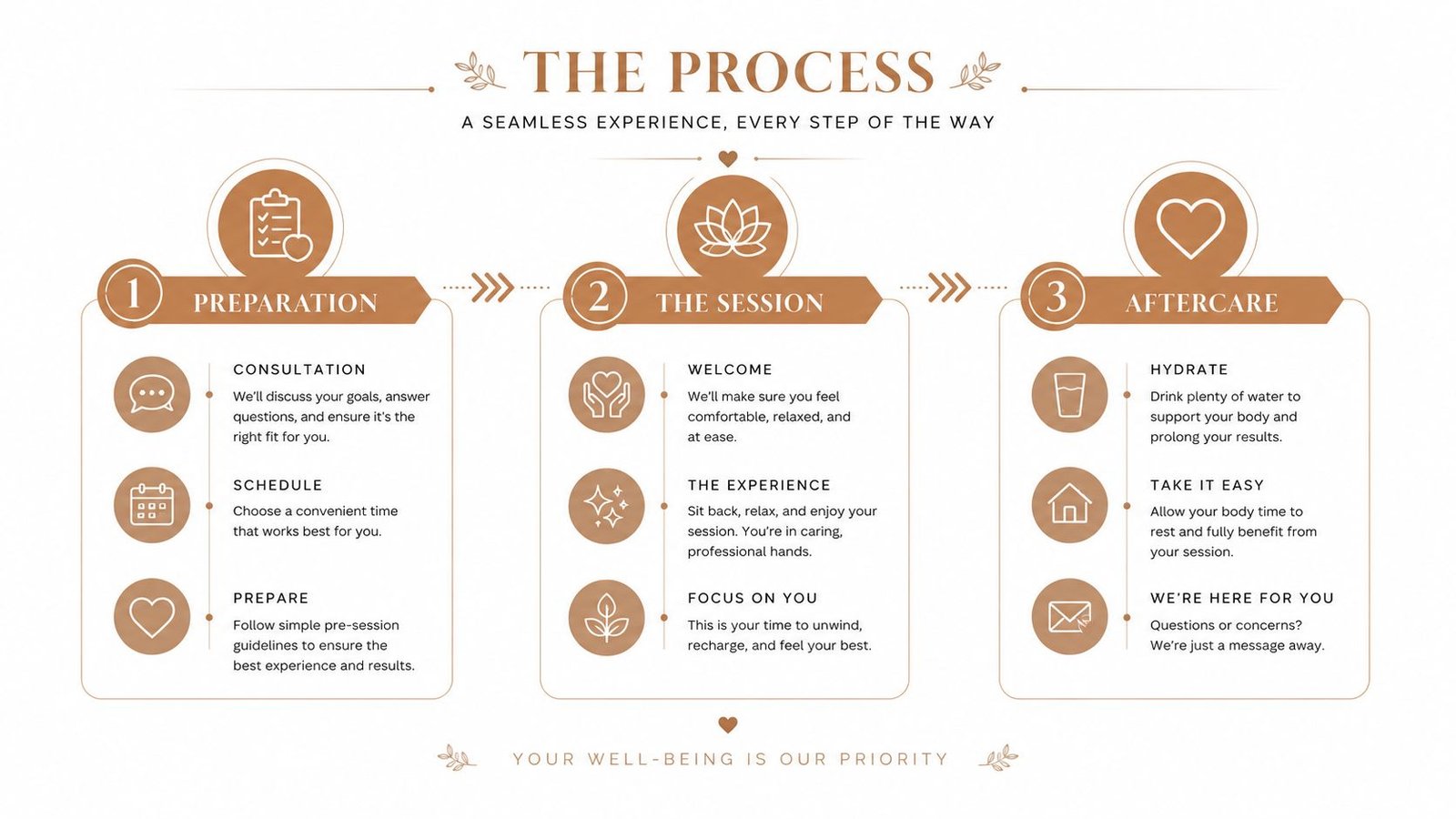
The day before a session, the goal is to keep your gut calm rather than empty it aggressively. Light meals, good hydration, and avoiding heavy fats or alcohol are the usual commonsense moves. If you take prescription medications, ask the clinician who prescribed them whether anything needs to change before you book.
What the appointment usually feels like
In the room, expect draping, a brief explanation of the setup, and a gentle insert. A skilled therapist should keep checking comfort, not just move through a script. Some pressure and urgency can happen, and mild cramping may come and go, but sharp pain is a stop signal.
The water cycles can feel repetitive, and that's normal. Think of the session as a rhythm, not a single push. The therapist may use abdominal massage to help waste move more comfortably, then give you a short rest afterward before you leave.
What to do after you leave
Hydration matters most after the session. Eat plain, choose gentle fiber-rich foods if your gut tolerates them, and don't schedule intense exercise for the rest of the day. If you notice delayed dizziness, bleeding, fever, or cramping that keeps building, that's not something to brush off.
Some providers suggest multiple sessions, but more isn't automatically better. A conservative gap between visits gives your body time to show whether the first session helped or irritated your symptoms. For practical food ideas after treatment, see this aftercare guide.
Simple aftercare rule: if your body feels unusually dry, shaky, or crampy after a session, treat that as a reason to slow down, not to push for another appointment.
Alternatives and Complementary Therapies Worth Considering
Colon hydrotherapy sits in a much bigger IBS toolbox. The strongest guideline-backed options are still the ones that target triggers, gut sensitivity, and bowel pattern more reliably. That's where a layered plan usually makes more sense than betting everything on one procedure.
Treatments that usually come first
A low-FODMAP diet guided by a registered dietitian can help many people identify food triggers without guessing. Gut-directed psychological therapies such as CBT or hypnotherapy can help with the gut-brain loop, especially when stress makes symptoms spike. For IBS-C, pelvic-floor physical therapy can matter if evacuation is part of the problem.
Medication choices depend on subtype. Gastroenterologists often use antispasmodics, osmotic laxatives for constipation-predominant cases, and antimotility agents for diarrhea-predominant cases. Some patients also need a broader plan that includes sleep, stress management, and trigger tracking.
A private wellness clinic may offer supportive services alongside hydrotherapy, but those shouldn't replace IBS care with a gastroenterologist. One option in Central New Jersey is C&A Wellness Center, which offers colon hydrotherapy plus complementary services like far-infrared sauna, ionic foot detox, and body wraps. That kind of setting can be useful for people who want a structured, one-on-one appointment format, but the IBS decision still belongs in a medical context.
If you're weighing options, ask yourself which path has the stronger evidence for your subtype. Colon hydrotherapy can sit beside other wellness practices, but it shouldn't crowd out treatments with a better track record.
Choosing a Certified Therapist and Booking in Central New Jersey
The right provider should make you feel informed before you ever lie down on the table. Look for I-ACT certification, professional equipment, clean private rooms, disposable single-use inserts where applicable, and a therapist who explains the process without pressure. Transparent pricing and a willingness to discuss your bowel history are signs you're in the right place.
Questions worth asking before you book
- How is the equipment sanitized? Ask what's single-use and what's disinfected between clients.
- What screening do you do? A good therapist should ask about surgeries, infections, hemorrhoids, and current flare symptoms.
- How private is the room? One-on-one care should mean one-on-one care.
- What happens if I feel pain or dizziness? You want a clear stop protocol, not vague reassurance.
- Will you coordinate with my clinician? For IBS, that matters.
If you're in Middlesex County or nearby, booking details matter too. C&A Wellness Center is based at 416 Washington St., Perth Amboy, NJ, with daily hours from 8 AM to 3 PM, phone-or-text scheduling, and service coverage that includes Edison, Woodbridge, Sayreville, South Amboy, Old Bridge, Carteret, South Brunswick, New Brunswick, and Metuchen. The clinic describes its colon hydrotherapy as a private, therapist-guided service, and that one-on-one structure may appeal to first-time clients who want a slower introduction.

Before you book, bring your IBS subtype, your current symptom pattern, and your medical history into the conversation. A careful therapist will help you decide whether this is a reasonable add-on or whether your symptoms point toward a better first step.
If you're in Central New Jersey and want a private, one-on-one appointment for colon hydrotherapy, C&A Wellness Center offers a calm setting, certified guidance, and complementary wellness services alongside the procedure. For IBS, the smartest next step is to compare your symptom pattern with the limited evidence, then talk it through with a clinician and a qualified provider. Visit C&A Wellness Center to review services, ask questions, and decide whether this approach fits your situation.