

You're standing in a store aisle or scrolling online, and every bottle seems to promise immune system support. One label says “detox,” another says “boost,” and a third makes it sound like your body is one supplement away from becoming unbreakable. That mix of claims is exactly why immune health feels confusing, especially when you're trying to make sensible choices for yourself, your family, or a busy season of life.
The clearer way to think about immunity is simpler. Your immune system isn't a switch you flip, and it's not a single organ you can upgrade with one product. It's a layered defense network shaped by sleep, food, movement, stress, and environment, and the strongest habits are usually the least glamorous ones.
That's why a slower, evidence-informed approach helps more than miracle-cure language. The goal isn't to chase the loudest claim, it's to understand what actually supports your body day after day, then decide where complementary therapies fit safely. If you want a local wellness perspective on that bigger picture, integrative health and wellness gives a useful frame for how lifestyle and bodywork can be discussed without hype.
Table of Contents
- Why Immune Health Feels So Confusing Right Now
- How the Immune System Works
- Everyday Factors That Weaken Immunity
- The Daily Routine That Supports Immunity
- Nutrition and Micronutrients That Move the Needle
- Evaluating Complementary Therapies With Clear Eyes
- Common Questions First-Time Wellness Clients Ask
- A Simple Starting Plan for Central New Jersey Residents
Why Immune Health Feels So Confusing Right Now
A lot of people feel as if they're doing “all the right things” and still getting run down. The hard part is that immune advice usually comes in pieces, a sleep tip here, a supplement ad there, a detox promise on social media, and none of it explains how the pieces fit together. That leaves people guessing, and guessing costs time, money, and energy.
The clearer frame is this, immune system support is about maintaining a defense network, not fixing one broken part. Your body relies on a mix of nutrients, recovery, movement, and barrier function to keep that network working well. That is why a local wellness conversation in Central New Jersey often starts with basics like sleep, food, and stress before it moves to supplements or bodywork, the same kind of perspective you'd expect from integrative health and wellness guidance.
A helpful way to sort through the noise is to ask a simple question: does this recommendation support the body's day-to-day defenses, or does it promise a shortcut? That question matters because immunity is not a single knob you turn up. It depends on many systems working together, and each one can be nudged in the wrong direction by poor sleep, low-quality food, or constant stress.
Why the system view matters
People often hear “boost immunity” and assume more is always better. Biology does not work that way. The body needs the right inputs in the right amount, then it needs rest, circulation, and intact barriers to keep doing its job.
The U.S. Office of Dietary Supplements says adequate intake of vitamins A, C, D, E, selenium, and zinc supports proper immune function, and clinical deficiencies can weaken immunity and raise susceptibility to infections (NIH ODS immune function fact sheet). A NHANES-based analysis also found common shortfalls in adults aged 19 and older, including 45% below the EAR for vitamin A, 46% for vitamin C, 95% for vitamin D, 84% for vitamin E, and 15% for zinc (NHANES-based analysis).
Practical rule: if a claim sounds like it can replace sleep, food, or movement, it is probably oversimplifying how immunity works.
That is the lens for the rest of this article. First comes the basic anatomy of immunity, then the habits that can weaken it, then the nutrients that matter most, and finally a safety-first look at the therapies clients often ask about in real wellness settings, including what they can and cannot reasonably do.
How the Immune System Works
The immune system has several working parts, and they do different jobs at different speeds. Skin and gut lining form the first barrier. The innate immune system responds quickly when something slips through. The adaptive immune system takes longer, but it learns from earlier exposure and responds more precisely the next time.
The fast-response side uses white blood cells to act on trouble without needing every detail first. The adaptive side relies on T cells, B cells, and antibodies to recognize specific threats and build a better response over time. That difference matters because immune support is not about pushing the body to react harder. It is about helping each part do the job it already has.
The gut connection matters
The gut is one of the main meeting points between the outside world and your internal systems. Food, microbes, and irritants all pass through this space, so the gut lining has to act like a careful filter. If that barrier is irritated or undernourished, the immune system has more to sort through.
The lymphatic system helps move immune cells and fluid through the body so surveillance and response can happen where they are needed. In a local wellness setting, this is one reason people ask about lymphatic drainage support alongside better sleep, food quality, and stress care. The idea is not to force the immune system into overdrive. It is to support the systems that keep it organized.
The NIH Office of Dietary Supplements highlights nutrients such as vitamins A, C, D, E, selenium, zinc, iron, riboflavin, and B12 because they support epithelial-barrier integrity, phagocyte activity, antibody production, and immune-cell signaling. In plain language, immunity depends on well-fed tissues and coordinated responses, not on a louder reaction.
The better question is, “How do I help my immune system stay organized, nourished, and responsive?”
Everyday Factors That Weaken Immunity
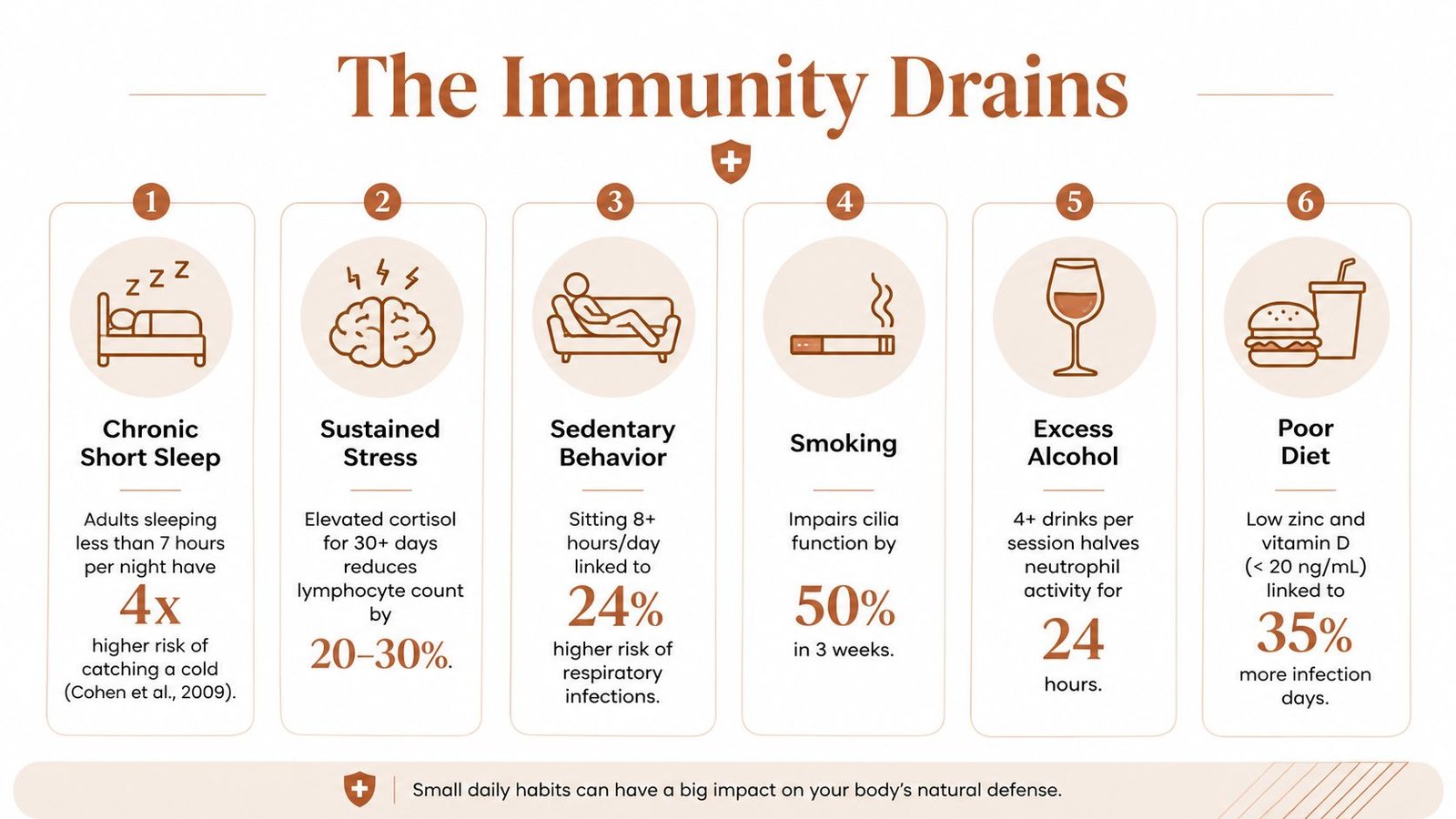
Some of the biggest immune drains are ordinary habits people barely notice anymore. Short sleep, ongoing stress, long stretches of sitting, smoking, too much alcohol, and eating patterns low in fiber or micronutrients do not usually cause one dramatic problem. They create a steady drag that can show up as frequent colds, slower recovery, and that feeling of always being a little behind.
The pattern is hard to ignore. A 2021 review summarizing meta-analyses reported that regular physical activity is associated with a 31% lower risk of infectious disease and a 37% lower risk of infectious disease-related mortality (review of meta-analyses). The same review noted that higher fiber intake in one study tracked with lower infectious-disease mortality risk and lower respiratory-disease mortality risk, a strong reminder that immune support starts with daily routines, not rescue tactics.
Nutrient gaps are more common than many realize
The NHANES-based analysis is especially useful because it shows how widespread the gaps are. Among adults 19 and older, shortfalls below the Estimated Average Requirement were found in 45% for vitamin A, 46% for vitamin C, 95% for vitamin D, 84% for vitamin E, and 15% for zinc, and even with supplements included, shortfalls stayed substantial for some nutrients (NHANES-based analysis). That does not mean everyone needs a shelf full of capsules. It means a lot of people are trying to support immunity from a nutritional deficit.
In a Central New Jersey wellness practice, this comes up often in plain terms. People are eating, but not always in a way that consistently covers protein, fiber, and the micronutrients immune cells rely on. A cup of coffee and a rushed breakfast can get through a morning, but they do not feed the immune system the way a steadier meal pattern can.
What to adjust first
Use this order when you are deciding what deserves attention:
- Sleep first: If bedtime is erratic, start there before buying another supplement.
- Food second: If meals are low in protein, fiber, and color, fix the plate before you stack products.
- Movement third: A daily walk often does more than a weekend burst of intensity.
- Substances last: Smoking and excess alcohol keep the immune system busy in the wrong way.
The CDC's guidance on enhancing immunity emphasizes adequate sleep, regular physical activity, healthy weight, no smoking, and limited alcohol because these habits shape host defense directly (CDC guidance). That is the main order of operations. If those basics are unstable, the rest matters less.
The Daily Routine That Supports Immunity
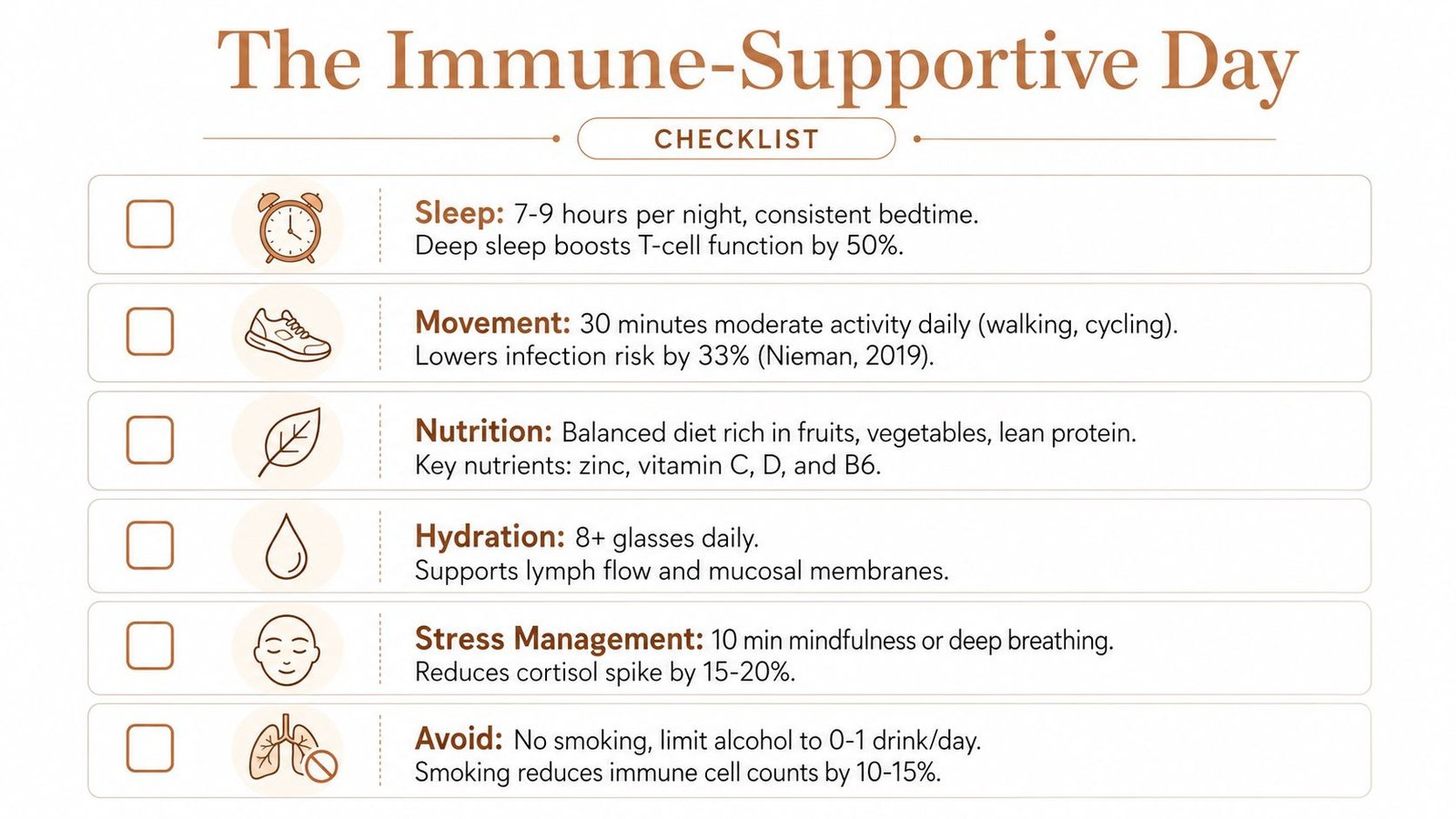
A routine that supports immunity usually looks ordinary from the outside. You sleep enough, move your body regularly, eat in a way that covers key nutrients, and keep the habits that strain immune cells from becoming daily patterns. In a Central New Jersey wellness practice, that often means helping people see that support starts with what they repeat, not with what they do once in a while.
For many adults, sleep is the first place to steady the day. The goal is not perfect sleep hygiene, it is consistency. If bedtime shifts by hours every night, the body never gets a reliable chance to settle into recovery, the way a house never quite warms up if the thermostat keeps changing.
A realistic weekday template
A workable day can start easily. You get up, drink water, and move early enough that stiffness does not linger all morning. Lunch includes protein and plants, then the day ends with a walk or a short stretch instead of a second round of scrolling.
A 30-minute walk often fits better than an intense bootcamp because it is easier to repeat. Repetition matters more than intensity. Regular moderate movement supports circulation, and that helps immune cells travel where they are needed.
What to protect
- Sleep: Keep a consistent bedtime as much as possible.
- Movement: Choose something you will repeat next week.
- Recovery: Leave a real pause between work and bedtime.
- Substances: Keep smoking out of the routine and treat alcohol as an occasional choice, not a coping strategy.
The larger point from the research on activity and infection outcomes is straightforward, immune support builds over time, it does not happen all at once (review of meta-analyses). That is why a simple routine wins. It does not need to feel impressive, it just needs to be repeatable.
Nutrition and Micronutrients That Move the Needle
“Eat healthy” is too vague to help here. A better question is which nutrients matter most for immune function, and how do you get them without turning dinner into a supplement routine. The nutrients most consistently tied to immune support are vitamin C, vitamin D, and zinc, and the broader group also includes vitamins A, C, D, E, selenium, zinc, iron, riboflavin, and B12.
Each one has a role. Vitamin A helps maintain barrier integrity, so it matters for skin and mucosal surfaces. Vitamin C supports antioxidant defense and helps protect immune cells. Vitamin D helps regulate immune-cell function. Zinc supports signaling and normal immune-cell activity, and protein supplies the building blocks your body uses to make immune cells and antibodies, as noted in the Fred Hutch overview of immune-supportive nutrition (Fred Hutch explanation).
Food first, then targeted testing
Food should come first because it brings several nutrients together on one plate. Citrus, peppers, leafy greens, beans, seeds, eggs, fish, yogurt, tofu, and lean meats all add something useful to the immune picture. That matters more than buying a random multivitamin and hoping it fills every gap.
If you suspect a real deficiency, testing is a better next step than guessing. The NIH fact sheet supports targeted correction when deficiency is part of the problem, and that is especially relevant for nutrients like vitamin D, vitamin C, and zinc, which are often the first places clinicians look when immune support concerns keep coming up as an issue. As noted earlier, the most helpful approach is to identify whether the problem is intake, absorption, or something else before adding more pills.
If you are thinking about what gentle re-feeding looks like after bodywork or a cleansing service, what to eat after colonic is a practical guide for easing back into normal meals without turning the moment into a cleanse ritual.
A multivitamin can be a backup, but it is not a shortcut around a thin diet, poor sleep, or a deficiency that needs testing.
The practical takeaway is simple. Build meals around protein, fiber, and color, then ask a clinician whether testing makes sense before adding more supplements to the routine.
Evaluating Complementary Therapies With Clear Eyes
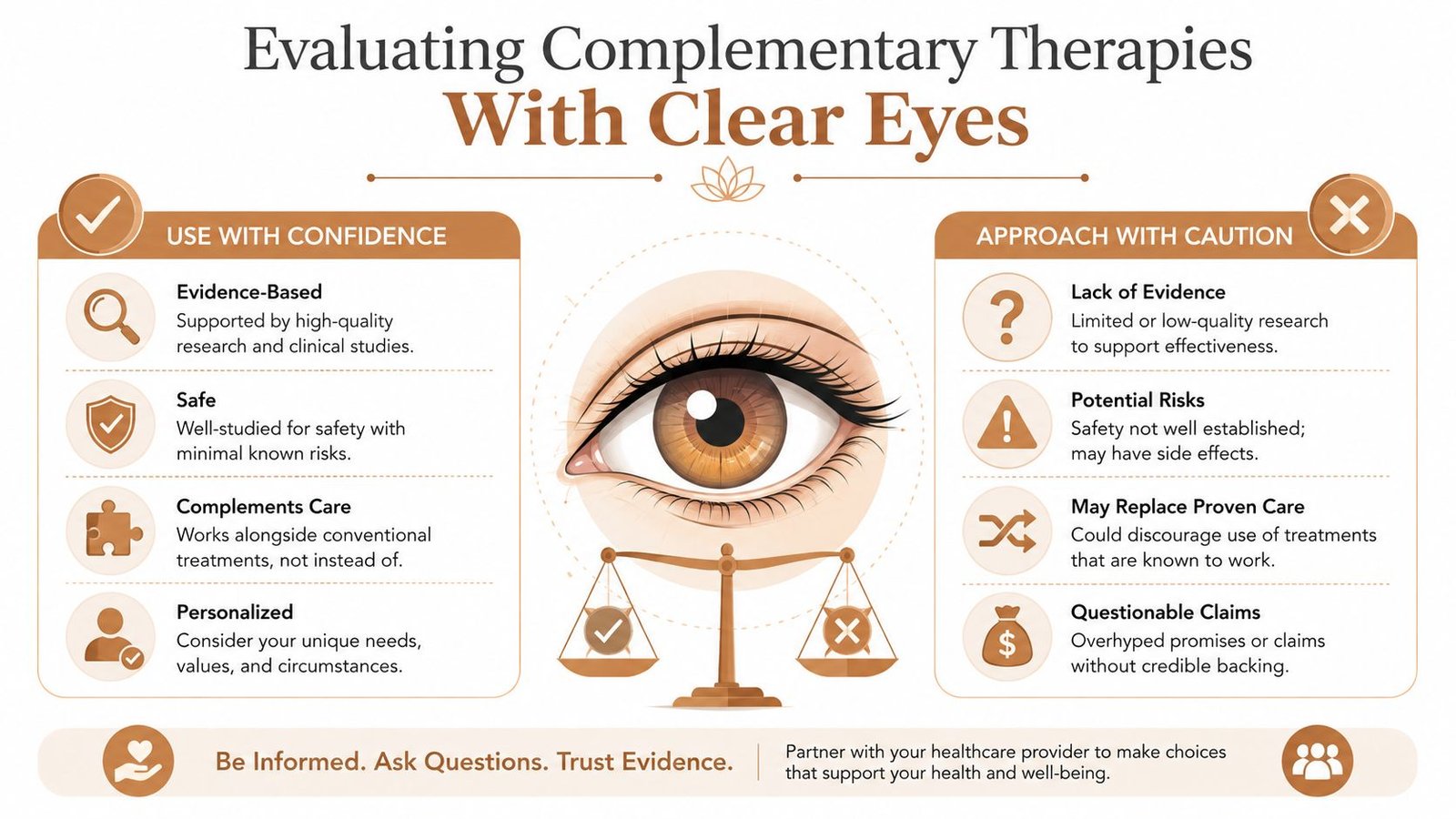
A lot of clients ask about therapies that sound supportive, relaxing, or cleansing, and that's fair. People want something they can feel, especially when they're trying to unwind or reset. The honest answer is that these therapies can fit into a wellness routine, but they shouldn't be mistaken for immune replacements.
Far-infrared sauna is usually the easiest example to understand. A session involves sitting in a warm, enclosed space, which many people find relaxing and helpful for easing muscle tension. The expectation is comfort and recovery support, not a direct immune overhaul. Sauna use isn't a fit for everyone, especially if someone is pregnant or dealing with cardiac concerns, so screening matters before booking.
How to think about the other options
Ionic foot detox baths are often described as a soothing add-on. People usually report that the experience feels calm and structured, but there isn't strong evidence that a foot bath can “pull toxins” from the body. Colon hydrotherapy is a more intimate service, and in a professional setting it's generally about privacy, hydration, and therapist-guided comfort rather than a dramatic cleanse narrative.
Herbal and mineral body wraps can leave the skin feeling smoother and more cared for. Ear candling is another service clients sometimes ask about, though it's best approached cautiously because the claims around it often outrun the evidence. The safest way to choose among these is to ask what outcome you actually want, relaxation, routine, skin feel, or a sense of reset, and then match the therapy to that goal.
A simple comparison lens
- Best for relaxation: sauna or a calm body wrap session.
- Best for a guided, private experience: colon hydrotherapy in a single-client room.
- Best for routine-building: therapies that fit easily around sleep, meals, and movement.
- Needs the most caution: anything marketed as a detox cure or as a substitute for medical care.
A single-client, professional setting matters because comfort and hygiene shape the whole experience. In Central New Jersey, C&A Wellness Center offers colon hydrotherapy, far-infrared sauna, ionic foot detox baths, and body wraps in private appointments with an I-ACT certified therapist, which gives clients a structured environment to ask questions before they commit to a session. The point isn't that one service “fixes” immunity, it's that a calm setting can make wellness care more usable and less intimidating.
Common Questions First-Time Wellness Clients Ask
People usually ask the practical questions first, not the science questions. How often should I book this? Will I feel wiped out after? Do I need to eat before I come in? Those are the right questions, because comfort and safety matter more than marketing language.
For a sauna session, a first visit is usually best kept simple, especially if you're still learning how your body handles heat. For foot detox or a wrap, think of the session as an add-on to your routine, not the main event. Colon hydrotherapy should always start with clear screening, a conversation about goals, and a review of any red flags that might mean you should check with a physician first.
What to do before and after
- Before a session: Eat lightly, hydrate, and avoid arriving rushed.
- After a session: Keep the rest of the day calm if you can, especially after a first-time appointment.
- If you're stacking therapies: Don't do everything at once. Space out services so you can tell what actually helps.
- If you feel unsure: Ask for a pre-session explanation. A good therapist should welcome that.
Results vary by goal. Some people notice relaxation immediately, while others mainly appreciate the ritual, privacy, and structure over time. If a service promises dramatic immune changes right away, that's a sign to slow down and ask better questions.
The safest rule is simple, choose comfort first, then see whether the service fits your real life. If you've had recent illness, are pregnant, have heart concerns, or take medications that affect hydration or blood pressure, pause and get medical input before booking.
A Simple Starting Plan for Central New Jersey Residents
For the next two weeks, pick one sleep habit, one food upgrade, one movement habit, and one calming session. That might mean a consistent bedtime, adding protein to breakfast, walking after dinner, and scheduling one private wellness visit instead of trying to overhaul everything at once.
If you're in Perth Amboy or nearby Edison, Woodbridge, Sayreville, South Amboy, Old Bridge, Carteret, South Brunswick, New Brunswick, or Metuchen, C&A Wellness Center offers private appointments from 8 AM to 3 PM with an I-ACT certified therapist with more than 20 years of experience. The first visit is a low-pressure consultation, so you can discuss goals, preparation, and what feels appropriate before you book anything else.
C&A Wellness Center provides a calm, private place to explore colon hydrotherapy, sauna, foot detox, and body wrap services alongside the everyday habits that support immunity. If you want a local, one-on-one conversation about what fits your goals, visit C&A Wellness Center and schedule a first appointment when you're ready.